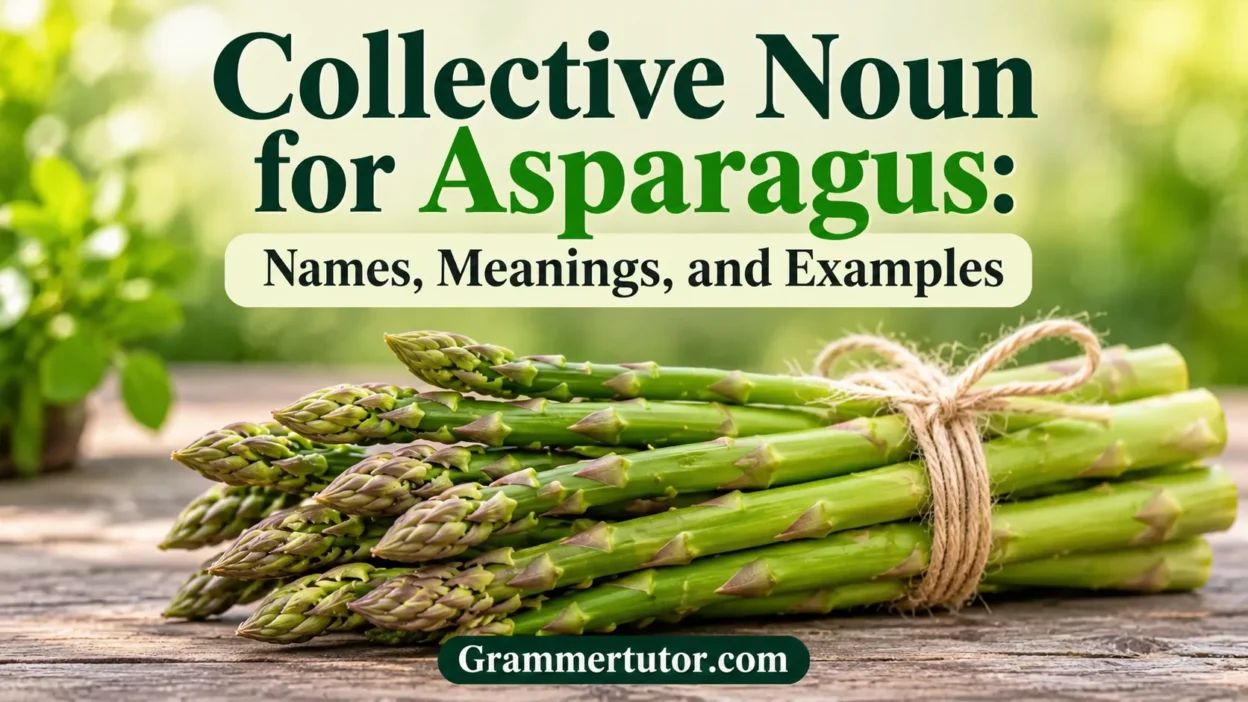
The collective noun for asparagus helps describe several spears grouped together rather than referring to each one separately. In everyday English, a bunch of asparagus is the most common expression, especially when talking about fresh vegetables bought from a grocery store or prepared for cooking. It makes your descriptions simple, clear, and natural.
You can also use expressions such as a bundle of asparagus, cluster of asparagus, or bed of asparagus, depending on the situation. A bunch or bundle usually refers to harvested spears gathered together, while a cluster describes asparagus growing close together. A bed of asparagus refers to an area where asparagus plants grow in a garden or farm. Each expression has its own purpose, so choosing the right one makes your English more accurate.
For example, you might say, “I bought a bunch of asparagus from the market,” when discussing grocery shopping. Similarly, “The farmer has a large bed of asparagus” describes plants growing in a cultivated area. These expressions are useful in cooking, farming, and gardening because they help you describe asparagus clearly. Learning their meanings also improves your vocabulary and helps you communicate naturally in everyday conversations.
Why Asparagus Is Described Using Group Expressions
Asparagus is a perennial vegetable that produces long, tender shoots from underground crowns. These shoots are commonly called spears, and several of them may be harvested and placed together for storage, transportation, or sale.
English speakers often use bunch when several fresh spears are tied or arranged together. The word bundle is another useful choice when the vegetables are gathered into one compact arrangement.
When discussing asparagus in a garden, expressions such as cluster or bed may be more suitable because they describe how the plants grow in a particular area. These terms help distinguish harvested vegetables from living plants in the field.
Common Group Expressions for Asparagus
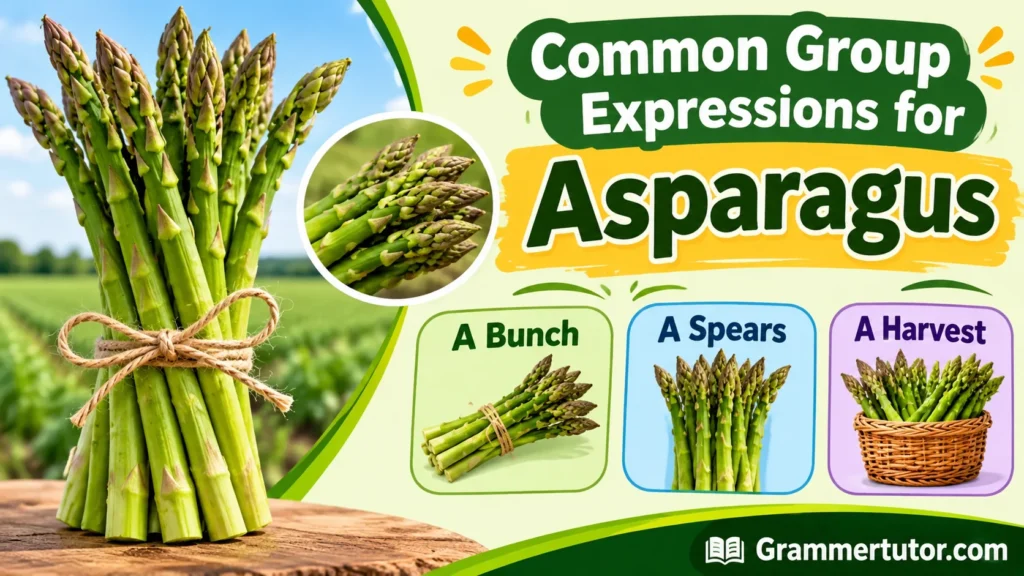
| Expression | Simple Example |
| Bunch | A bunch of asparagus was on the counter. |
| Bundle | She purchased a bundle of asparagus. |
| Bunch of Spears | A bunch of asparagus spears was ready for cooking. |
| Cluster | A cluster of asparagus plants grew in the garden. |
| Bed | A bed of asparagus covered the garden plot. |
Note: Asparagus does not have one universally established special collective noun. These are descriptive group expressions.
Bunch of Asparagus
A bunch of asparagus is the most familiar expression for several fresh spears gathered together. Grocery stores commonly sell asparagus in bunches, making this phrase useful in shopping, recipes, and everyday conversations.
Examples of “Bunch of Asparagus”
- I bought a bunch of asparagus from the vegetable market.
- A bunch of asparagus was placed beside the sink.
- She washed a bunch of asparagus before preparing dinner.
- He carried a bunch of asparagus home from the shop.
- We need a bunch of asparagus for tonight’s meal.
- My mother added a bunch of asparagus to the shopping basket.
- A fresh bunch of asparagus was displayed on the shelf.
- The chef selected a bunch of asparagus for the recipe.
- She stored the bunch of asparagus in the refrigerator.
- A bunch of asparagus was served with roasted potatoes.
Bundle of Asparagus
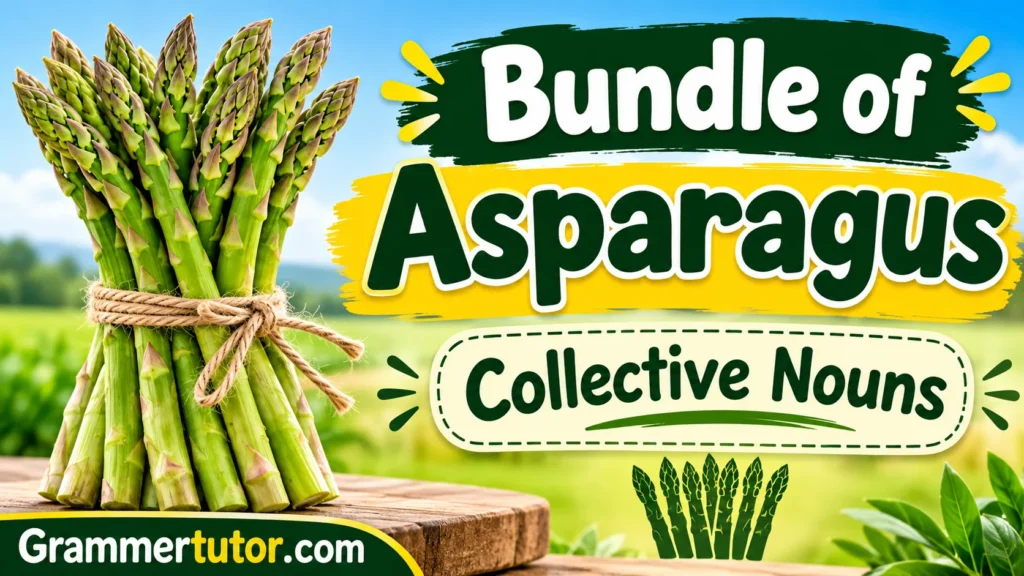
A bundle of asparagus describes several spears collected and arranged together. This expression is particularly suitable when the vegetables are tied, packed, or prepared for transportation.
Examples of “Bundle of Asparagus”
- He purchased a bundle of asparagus at the farm shop.
- A bundle of asparagus was wrapped in fresh paper.
- She placed a bundle of asparagus on the kitchen table.
- The farmer prepared a bundle of asparagus for sale.
- We carried a bundle of asparagus from the garden.
- A bundle of asparagus was packed into the basket.
- The cook selected a bundle of asparagus for lunch.
- My sister brought a bundle of asparagus home.
- The market displayed a bundle of fresh asparagus.
- He tied the bundle of asparagus with a small string.
Cluster of Asparagus
A cluster of asparagus refers to several asparagus shoots or plants growing close to one another. It is more suitable for describing the appearance of the vegetable in a garden or growing environment than a bunch of harvested spears.
Examples of “Cluster of Asparagus”
- A cluster of asparagus appeared in the garden.
- We noticed a cluster of asparagus near the fence.
- The gardener watered the cluster of asparagus every morning.
- A green cluster of asparagus grew beside the pathway.
- She discovered a cluster of asparagus behind the shed.
- The cluster of asparagus became taller during spring.
- Several insects were hiding near the cluster of asparagus.
- The farmer inspected the cluster of asparagus carefully.
- A healthy cluster of asparagus grew in the vegetable patch.
- Rainwater reached the cluster of asparagus after the storm.
Bed of Asparagus
A bed of asparagus describes an area of cultivated land where asparagus plants grow. Gardeners and farmers use this expression when discussing vegetable production, planting arrangements, and crop maintenance.
Examples of “Bed of Asparagus”
- A bed of asparagus grew behind the farmhouse.
- The gardener prepared a bed of asparagus in spring.
- We planted new crowns in the bed of asparagus.
- A bed of asparagus needs suitable soil conditions.
- The farmer inspected the bed of asparagus every week.
- She removed weeds from the bed of asparagus.
- The bed of asparagus produced fresh shoots.
- Water was supplied to the bed of asparagus regularly.
- The children helped their grandfather maintain the bed of asparagus.
- A healthy bed of asparagus can produce crops for many years.
Patch of Asparagus
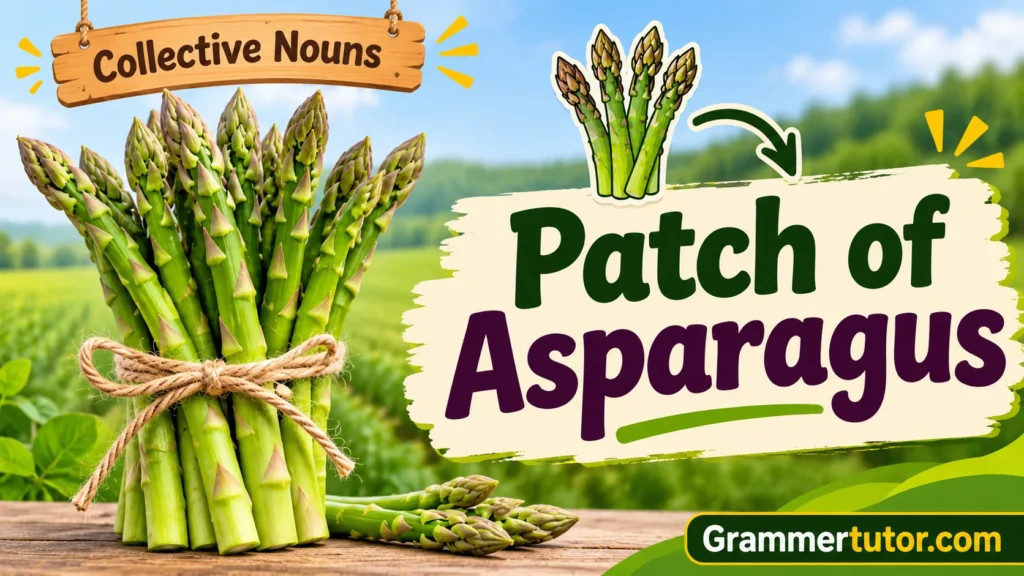
A patch of asparagus refers to a small or defined area where asparagus plants are growing. It is a convenient expression for describing home gardens, farms, and vegetable-growing spaces.
Examples of “Patch of Asparagus”
- A patch of asparagus grew beside the garden wall.
- The farmer planted a patch of asparagus near the barn.
- We found a small patch of asparagus behind the house.
- She watered the patch of asparagus before breakfast.
- The patch of asparagus produced several green shoots.
- My grandfather grows asparagus in a sunny patch.
- The gardener protected the patch of asparagus from weeds.
- A new patch of asparagus was prepared for planting.
- The family harvested fresh spears from the patch of asparagus.
- The patch of asparagus looked healthy after the rain.
Growing Patterns and Varieties of Asparagus
Asparagus is a popular vegetable grown in home gardens and commercial farms.
There are several varieties of asparagus, and they differ in appearance, growing conditions, and cultivation methods. Green asparagus is the most familiar variety, while white asparagus is grown without exposure to sunlight, which prevents the development of its green color. Purple asparagus contains natural pigments called anthocyanins that give its spears a distinctive appearance.
Asparagus grows best in well-drained soil with plenty of sunlight. Gardeners usually allow newly planted crowns to become established before harvesting heavily. Once established, an asparagus planting can remain productive for many years.
Examples of Asparagus Varieties
- Green asparagus has a familiar green appearance.
- White asparagus grows without direct sunlight.
- Purple asparagus contains colorful natural pigments.
- Garden asparagus is commonly cultivated for food.
- Wild asparagus grows naturally in suitable environments.
- Young asparagus shoots are known as spears.
- Mature asparagus plants develop fern-like foliage.
- Asparagus crowns grow beneath the soil.
- Commercial asparagus is harvested for grocery markets.
- Homegrown asparagus can be collected from vegetable gardens.
Fascinating Facts About Asparagus
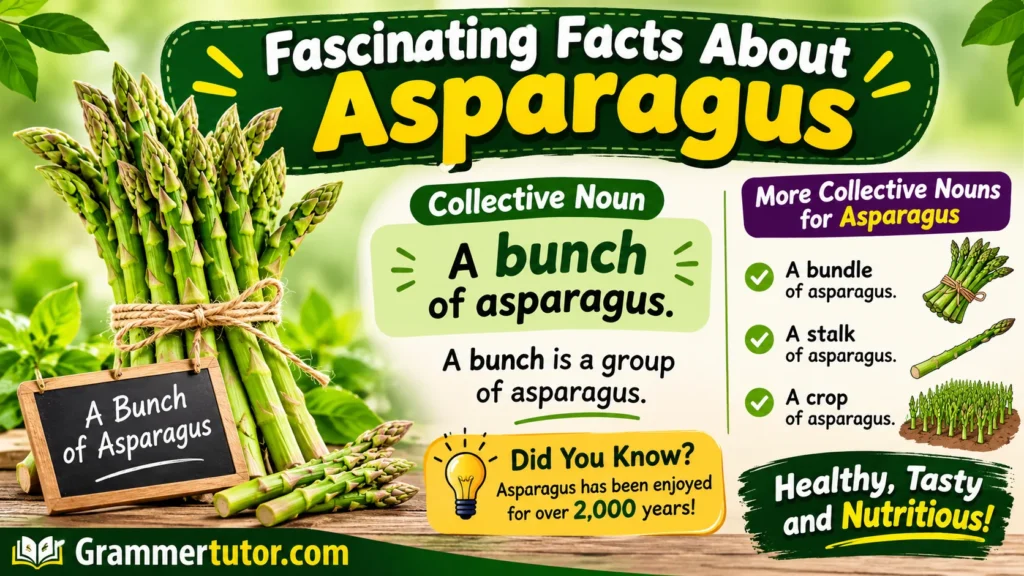
Asparagus is a remarkable perennial vegetable that can remain productive for approximately 10 to 20 years when properly maintained. Unlike many other vegetables that need to be replanted every season, asparagus grows from established underground crowns. Its longevity makes it a valuable crop for gardeners and farmers who want a long-lasting source of fresh produce.
Another interesting characteristic is that asparagus can grow in different colors. Green asparagus develops its color through sunlight exposure, while white asparagus is cultivated under soil or covered conditions. Purple varieties contain anthocyanins, which produce their attractive coloration. These differences make asparagus an interesting vegetable for both agricultural cultivation and everyday cooking.
Conclusion
Understanding the collective noun for asparagus makes it easier to describe this vegetable in everyday English. A bunch of asparagus is the most common expression, while bundle, cluster, and bed are useful in different contexts. Whether you are talking about cooking, grocery shopping, farming, or gardening, choosing the right expression helps you communicate clearly and improve your English vocabulary.
FAQs
Q1. What is the collective noun for asparagus?
The most common expression is a bunch of asparagus. It describes several fresh asparagus spears gathered together.
Q2. Can I say “a bundle of asparagus”?
Yes. A bundle of asparagus is a natural expression when several spears are collected, tied, or arranged together.
Q3. Is asparagus a countable or uncountable noun?
Asparagus is generally used as an uncountable noun when referring to the vegetable as food. Individual pieces are called spears of asparagus.
Q4. What are asparagus spears?
Asparagus spears are the young shoots that emerge from underground crowns. They are the edible parts commonly harvested for cooking.
Q5. What is a group of asparagus plants called?
A bed of asparagus or patch of asparagus describes an area where several asparagus plants are cultivated. A cluster of asparagus can also describe plants growing close together.