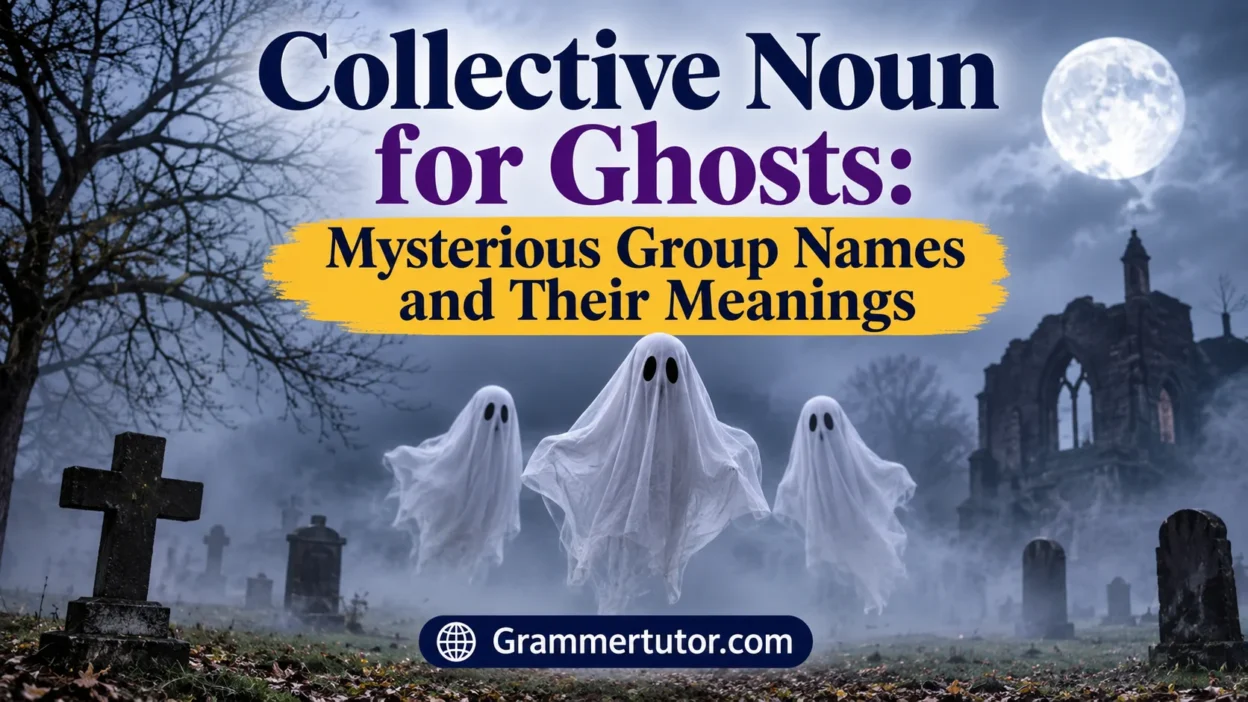
When exploring the collective noun for ghosts, you enter a world of ancient folklore, modern horror stories, and supernatural tales. For centuries, people have been fascinated by mysterious spirits appearing in countless legends, books, and films. In English, imaginative expressions help describe several ghosts appearing together as one group. Just as we say a pack of wolves, a swarm of bees, or a troop of monkeys, we can use different collective nouns to describe supernatural gatherings.
These familiar collective expressions make ghost-related vocabulary more interesting and create vivid pictures for readers. Some unusual terms include a haunting of ghosts, a gathering of ghosts, a host of ghosts, a legion of ghosts, and a horde of ghosts. Each expression offers a different way to describe mysterious scenes in storytelling, creative writing, and poetry.
From my experience with language and word choices, these phrases are particularly useful when writing descriptions of ghostly events. Unlike animal collective nouns, however, ghost expressions are not universally established. They do not have official scientific classifications or fixed linguistic classifications. Instead, they are imaginative phrases rather than officially standardised terms, making them an entertaining way to expand vocabulary and explore the relationship between language and supernatural folklore. These seven expressions provide examples and meanings that you can use in everyday writing.
Why Are Collective Expressions Used for Ghosts?
Collective expressions help writers describe several supernatural figures without repeatedly mentioning each individual spirit. They also establish an atmosphere, introduce emotion, and make mysterious scenes more memorable.
In ghost stories, the choice of vocabulary can change how readers imagine a supernatural gathering. A haunting creates an eerie impression, while a legion suggests an enormous gathering of spirits. Similarly, a procession gives the impression of ghosts moving together through a particular location.
These expressions are especially valuable in horror fiction, fantasy novels, Halloween descriptions, folklore discussions, and creative storytelling. They allow writers to communicate different moods through carefully selected words.
Because ghosts belong to supernatural traditions rather than the natural animal world, their group names are largely imaginative. You can therefore choose an expression according to the atmosphere and meaning you want to communicate.
Seven Collective Expressions for Ghosts

| Type | Simple Example |
| Haunting | A haunting of ghosts appeared inside the mansion. |
| Gathering | A gathering of ghosts occupied the abandoned hall. |
| Host | A host of ghosts wandered through the cemetery. |
| Legion | A legion of ghosts emerged from the darkness. |
| Horde | A horde of ghosts surrounded the ancient castle. |
| Procession | A procession of ghosts crossed the deserted road. |
| Assembly | An assembly of ghosts gathered beneath the ruined tower. |
Haunting of Ghosts
A haunting of ghosts is an imaginative expression that describes a supernatural gathering. The word haunting is closely connected with unexplained appearances, mysterious experiences, and spirits believed to remain in particular locations.
In supernatural storytelling, a haunting often involves spirits appearing in abandoned houses, old castles, forgotten buildings, or places associated with mysterious events. When several ghostly figures appear together, this expression creates an unsettling atmosphere.
The term is particularly useful when describing an eerie scene in which spirits seem connected to a location or repeatedly appear before unsuspecting visitors.
Examples of “Haunting of Ghosts”
- A haunting of ghosts appeared inside the deserted mansion.
- The villagers whispered about a haunting of ghosts near the old cemetery.
- A haunting of ghosts disturbed the silence of the abandoned village.
- The storyteller described a haunting of ghosts beneath the ruined castle.
- A haunting of ghosts frightened everyone who entered the building.
- The moonlight revealed a haunting of ghosts across the courtyard.
- A haunting of ghosts moved silently through the ancient corridors.
- The children imagined a haunting of ghosts inside the forgotten house.
- A haunting of ghosts appeared during the midnight storm.
- The legend described a haunting of ghosts surrounding the mysterious tower.
Gathering of Ghosts
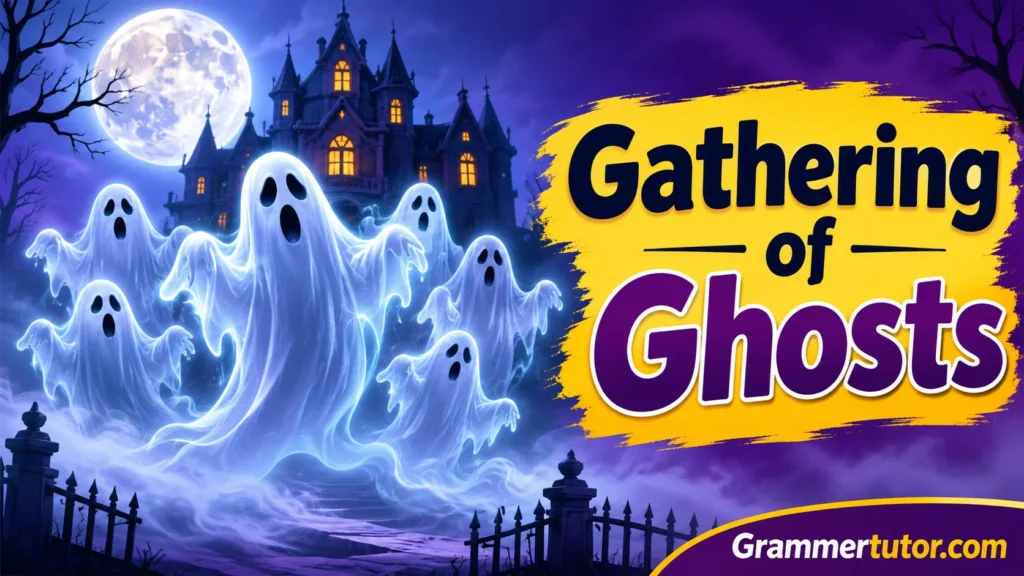
A gathering of ghosts is a straightforward descriptive expression for several supernatural spirits assembled in one place. Unlike more dramatic alternatives, the word gathering simply communicates that multiple figures have come together.
This phrase works particularly well in fantasy stories where spirits meet, communicate, or appear during a supernatural event. A writer might describe ghosts assembling around an ancient tree, inside an abandoned theatre, or near a forgotten burial ground.
The expression doesn’t automatically suggest danger or hostility. Instead, its meaning depends on the surrounding description and the atmosphere of the story.
Examples of “Gathering of Ghosts”
- A gathering of ghosts appeared beneath the silver moon.
- The abandoned theatre became the setting for a gathering of ghosts.
- A gathering of ghosts surrounded the mysterious old fountain.
- The traveller witnessed a gathering of ghosts near the bridge.
- A gathering of ghosts filled the empty ballroom.
- The ancient legend mentioned a gathering of ghosts every winter.
- A gathering of ghosts emerged from the misty woodland.
- The novelist described a gathering of ghosts inside the ruined chapel.
- A gathering of ghosts occupied the deserted village square.
- The strange noise announced a gathering of ghosts nearby.
Host of Ghosts

A host of ghosts is a traditional-sounding descriptive phrase that suggests a large number of supernatural spirits. The word host has long been used in English to describe a multitude or great gathering.
In supernatural fiction, this expression can communicate the appearance of numerous spirits arriving together. It works particularly well when describing an overwhelming scene involving mysterious figures, shadowy shapes, and unexplained movements.
The phrase also carries a slightly formal and dramatic tone, making it suitable for gothic literature, fantasy writing, and traditional ghost legends.
Examples of “Host of Ghosts”
- A host of ghosts appeared across the abandoned battlefield.
- The villagers saw a host of ghosts moving through the fog.
- A host of ghosts gathered outside the ancient fortress.
- The old diary described a host of ghosts in the valley.
- A host of ghosts surrounded the forgotten cemetery.
- The storyteller imagined a host of ghosts beneath the mountain.
- A host of ghosts emerged from the ruined monastery.
- The castle legend spoke of a host of ghosts after midnight.
- A host of ghosts drifted across the deserted courtyard.
- The travellers encountered a host of ghosts in their dreams.
Legion of Ghosts
A legion of ghosts describes an imagined multitude of supernatural spirits. The word legion traditionally refers to a very large organised body or multitude, making it an effective choice for dramatic supernatural descriptions.
This expression is particularly appropriate when a story involves numerous spirits appearing simultaneously. It can suggest an enormous gathering that overwhelms a particular location or creates an atmosphere of mystery and fear.
Writers often use words such as legion in fantasy and horror settings because they create a sense of scale and intensity. A legion of ghosts might appear above an ancient battlefield, surround a haunted palace, or emerge from an underground passage.
Examples of “Legion of Ghosts”
- A legion of ghosts emerged from the abandoned fortress.
- The legend described a legion of ghosts wandering across the battlefield.
- A legion of ghosts appeared beneath the blood-red moon.
- The villagers feared a legion of ghosts inside the ruined castle.
- A legion of ghosts surrounded the forgotten palace.
- The author introduced a legion of ghosts in the final chapter.
- A legion of ghosts crossed the deserted landscape.
- The mysterious painting showed a legion of ghosts in the sky.
- A legion of ghosts appeared during the supernatural ceremony.
- The old storyteller warned travellers about a legion of ghosts.
Horde of Ghosts
A horde of ghosts is a vivid expression that suggests a large, overwhelming gathering of supernatural figures. The word horde generally describes a massive crowd or multitude, often with a sense of disorder or movement.
In horror fiction, this phrase can create an image of countless spirits appearing together. They might surround a building, move through a dark forest, or fill the streets of an abandoned settlement.
Unlike a peaceful gathering, a horde often suggests something intimidating or difficult to control. It is therefore particularly effective when creating suspense and dramatic tension.
Examples of “Horde of Ghosts”
- A horde of ghosts swept through the abandoned streets.
- The frightened villagers spotted a horde of ghosts near the cemetery.
- A horde of ghosts appeared outside the ancient mansion.
- The storm revealed a horde of ghosts across the hillside.
- A horde of ghosts surrounded the deserted church.
- The film featured a horde of ghosts emerging from the shadows.
- A horde of ghosts filled the ruined underground passage.
- The mysterious forest concealed a horde of ghosts.
- A horde of ghosts approached the castle gates.
- The frightening legend described a horde of ghosts after sunset.
Procession of Ghosts
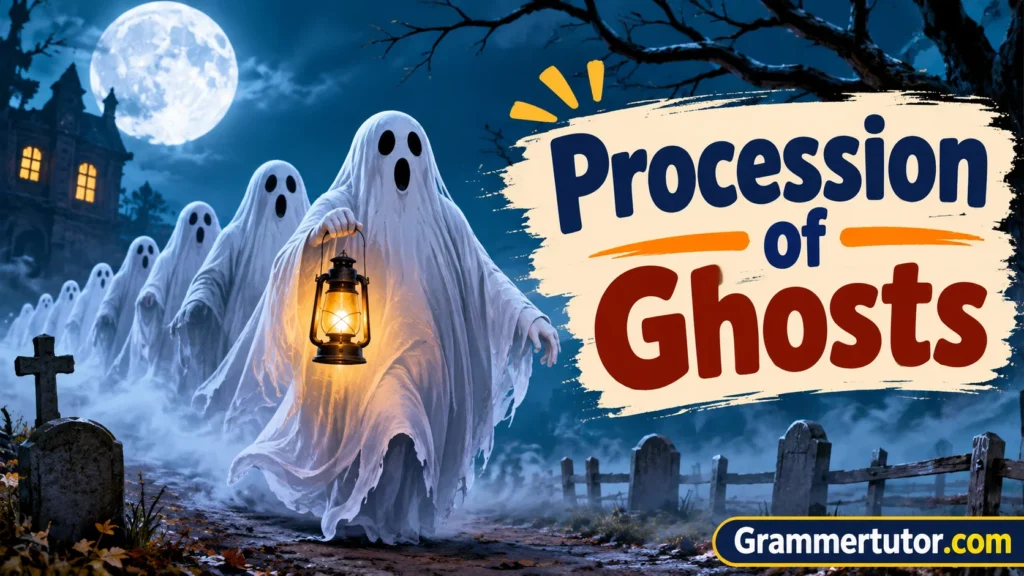
A procession of ghosts describes a line or sequence of supernatural figures moving together. The word procession usually refers to an organised group travelling from one place to another, often in a ceremonial or formal manner.
When applied to ghosts, it creates an unusual visual image of spirits moving silently through a particular setting. Imagine pale figures passing along a deserted road, crossing an old bridge, or travelling through the corridors of a forgotten palace.
This expression is particularly suitable for stories involving mysterious journeys, supernatural ceremonies, and ghostly appearances. It focuses more on movement and arrangement than simply the number of spirits.
Examples of “Procession of Ghosts”
- A procession of ghosts crossed the deserted village road.
- The villagers watched a procession of ghosts moving towards the castle.
- A procession of ghosts appeared beneath the evening mist.
- The old legend described a procession of ghosts near the river.
- A procession of ghosts travelled through the abandoned cemetery.
- The writer imagined a procession of ghosts passing through the forest.
- A procession of ghosts disappeared behind the ancient walls.
- The midnight fog concealed a procession of ghosts.
- A procession of ghosts moved silently across the courtyard.
- The mysterious painting portrayed a procession of ghosts beneath the moon.
Assembly of Ghosts
An assembly of ghosts is a simple and descriptive phrase for supernatural spirits gathered together. The word assembly generally means a collection of individuals brought together in one place.
In fantasy stories, an assembly of ghosts might represent spirits meeting to discuss an ancient secret, remember forgotten events, or participate in a supernatural gathering. The phrase can also describe a group of ghostly figures appearing together without suggesting any particular activity.
Its neutral meaning makes it suitable for different storytelling styles. Whether you’re writing a mysterious legend, a fantasy adventure, or a short Halloween story, this expression can fit naturally into your sentences.
Examples of “Assembly of Ghosts”
- An assembly of ghosts appeared inside the ancient chamber.
- The abandoned palace became the meeting place for an assembly of ghosts.
- An assembly of ghosts gathered beneath the ruined archway.
- The traveller discovered an assembly of ghosts near the old monument.
- An assembly of ghosts occupied the mysterious underground hall.
- The fantasy novel described an assembly of ghosts at midnight.
- An assembly of ghosts appeared around the forgotten throne.
- The storyteller imagined an assembly of ghosts inside the castle.
- An assembly of ghosts gathered during the supernatural celebration.
- The mysterious legend mentioned an assembly of ghosts in the mountains.
Ghostly Traditions and Their Place in Folklore
Ghosts appear in cultural traditions across the world, although beliefs about spirits differ considerably between communities. In folklore, they are often portrayed as supernatural beings connected with particular locations, unfinished business, historical tragedies, or memories of the past. Some stories present them as frightening figures, while others describe protective or harmless spirits.
Different literary traditions have developed distinctive ways of representing these mysterious characters. Gothic fiction frequently places ghosts inside abandoned mansions, ruined estates, and shadowy corridors. Fantasy stories may present entire communities of spirits with their own rules, histories, and supernatural abilities. Traditional legends often connect ghostly appearances with particular dates, ceremonies, or unusual events.
These stories have also influenced the English vocabulary used to describe supernatural gatherings. Words such as apparition, spectre, phantom, wraith, and spirit offer different ways to refer to ghostly figures. Similarly, expressions such as haunting, legion, and procession help writers create distinctive descriptions.
Common Features of Ghost Stories
- Apparitions: Unexplained figures that appear to human observers.
- Haunted locations: Buildings or places believed to contain supernatural activity.
- Spectral appearances: Mysterious figures described as ghostlike or otherworldly.
- Unusual sounds: Strange footsteps, whispers, or unexplained noises.
- Supernatural encounters: Experiences involving supposedly nonphysical beings.
- Ancient legends: Traditional accounts passed between generations.
- Midnight sightings: A familiar setting in fictional supernatural narratives.
- Forgotten histories: Past events used to explain mysterious appearances.
Interesting Facts About Ghosts and Supernatural Beliefs
Ghosts have occupied an important place in human storytelling for thousands of years. Ancient civilizations developed different beliefs about what happens after death, and many traditional accounts included spirits that could remain connected to the living world. However, there is no scientifically established evidence that ghosts exist as supernatural beings. Their descriptions belong primarily to folklore, religious traditions, literature, and cultural imagination. Unlike living animals, ghosts have no verified biological lifespan, physical anatomy, or scientifically established dietary habits. Their appearance and abilities depend entirely on the particular story or belief system.
One interesting aspect of ghost traditions is the variety of forms assigned to spirits. Some stories describe transparent human-like figures, while others portray shadowy silhouettes, glowing shapes, or invisible presences. In gothic literature, ghosts may appear wearing clothing associated with a particular historical period. Some fictional spirits can pass through walls, disappear suddenly, or communicate through unusual sounds. These characteristics are storytelling conventions rather than confirmed physiological features. Their descriptions often reflect the fears, customs, and historical experiences of the communities that created the legends.
Ghost stories also reveal how people use language to express mystery and uncertainty. Terms such as phantom, spectre, apparition, and wraith create slightly different impressions. Similarly, collective expressions such as a haunting of ghosts or a legion of ghosts help writers establish the size and atmosphere of a supernatural gathering. These imaginative descriptions remain popular in books, films, theatre, folklore collections, and Halloween celebrations. Their continued use demonstrates how supernatural themes influence vocabulary, creativity, and cultural traditions.
Conclusion
The collective noun for ghosts adds creativity and imagination to English vocabulary. Expressions such as a haunting, a gathering, a host, a legion, and a horde of ghosts make descriptions of supernatural gatherings more interesting. Although these expressions are not officially standardised, they are useful in storytelling, poetry, and creative writing. Choosing the right expression can help you create a clearer picture of mysterious spirits and make your writing more engaging.
FAQs
Q1. What is the collective noun for ghosts?
A haunting of ghosts is an imaginative expression used to describe several ghosts appearing together. Other descriptive alternatives include a gathering, host, legion, or assembly of ghosts.
Q2. Can you say a legion of ghosts?
Yes. A legion of ghosts is a grammatically correct and expressive phrase. It suggests a very large number of supernatural spirits.
Q3. Is haunting a recognised collective noun?
Haunting is a descriptive supernatural expression rather than a universally established grammatical collective noun. However, writers can use a haunting of ghosts creatively when describing a group of spirits.
Q4. What does a host of ghosts mean?
A host of ghosts refers to a large number of supernatural figures. The word host has traditionally been used to describe a multitude or extensive gathering.
Q5. What is the difference between a horde and a gathering of ghosts?
A horde suggests a large, potentially overwhelming crowd, whereas a gathering simply describes several ghosts assembled in one location. The first expression generally creates a more dramatic impression.