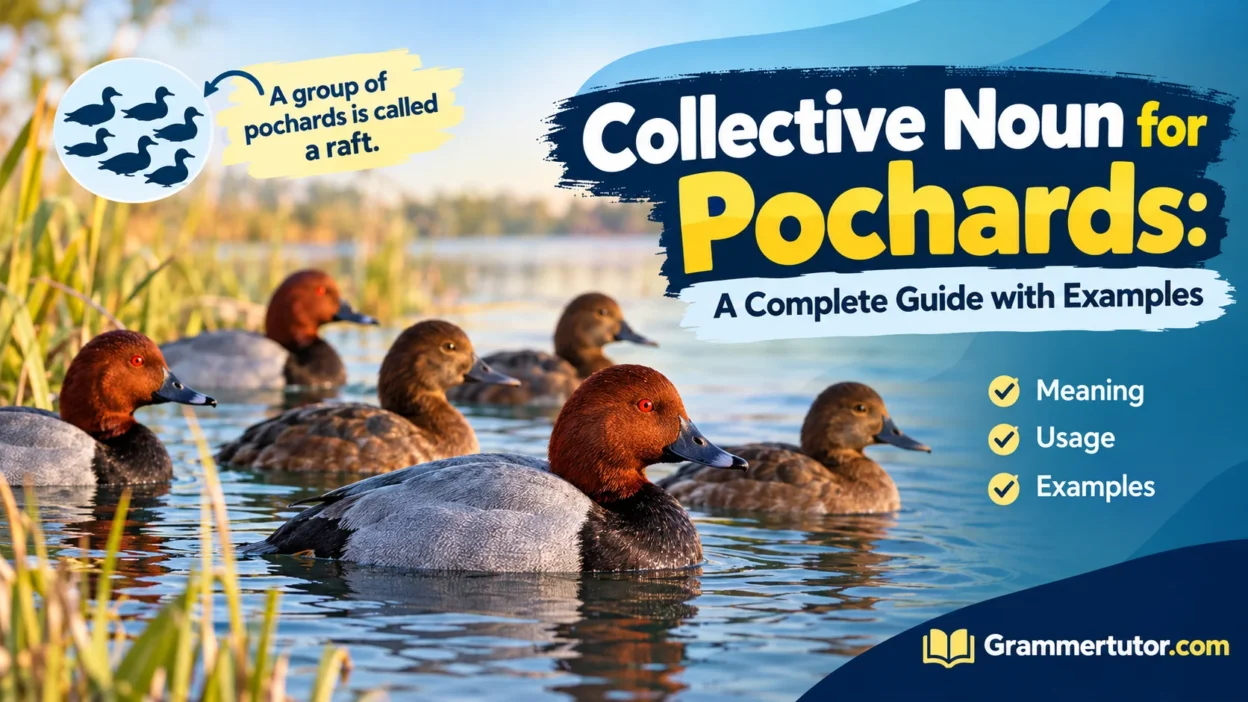
Collective Noun for Pochards is usually a flock of pochards. These medium-sized diving ducks are known for their distinctive plumage, diving abilities, and natural connection with lakes, ponds, and wetlands. They are fascinating waterbirds that attract birdwatchers, students, teachers, and nature enthusiasts interested in wildlife, bird terminology, and English vocabulary.
A flock is a common collective noun for groups of birds, including pochards. Another useful expression is a raft of pochards, especially when these diving ducks float together on the surface of a lake or surface of a pond. The general phrase group of pochards is also correct and easy to understand. Other bird-group terms include paddling, flight, skein, sord, badling, and team, although their use depends on the context. Pochards may be seen swimming together, flying, or gathering in groups on the water, making these expressions useful when describing their behavior.
Male pochards have different appearances depending on the season. During breeding plumage, males show a rusty-red head, black breast, pale grey body, and finely patterned vermiculated grey back. In winter plumage, a drake has darker grey upperwing coverts and paler grey flight feathers. During eclipse plumage, males develop greyer bodies, darker breasts, and a plain face, resembling females, which usually have a brown head, brown body, and paler cheeks. Both sexes have a grey bill, black tip, grey legs, and a pale grey wing stripe visible in flight. Observing these features helps distinguish pochards from other ducks and understand their flocking behavior in natural habitats.
Why Collective Nouns Are Used for Pochards
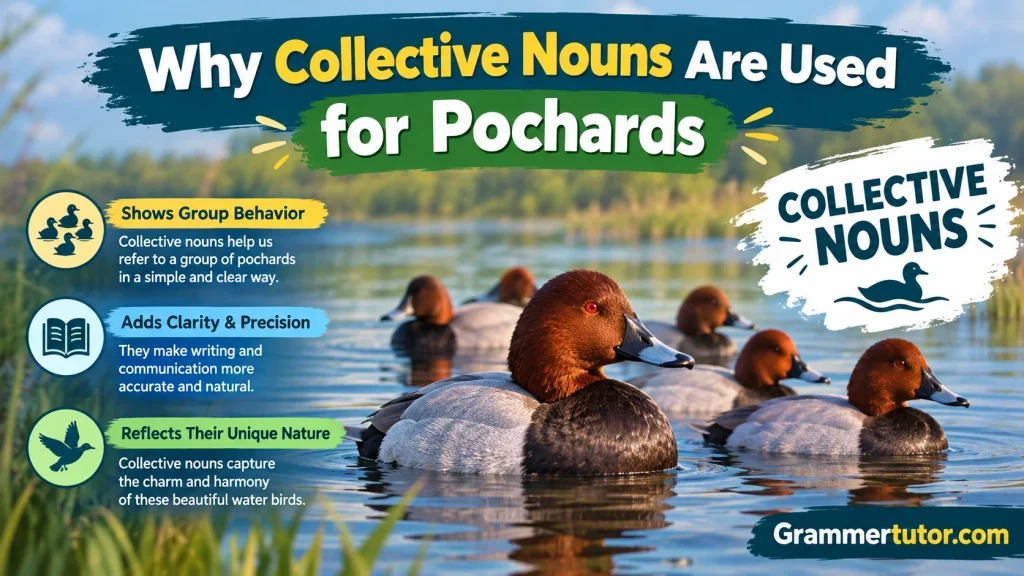
Collective nouns give groups of animals descriptive names and make writing more natural. Instead of repeatedly using the phrase “a group of pochards,” writers can say “a flock of pochards” to create a clearer and more engaging sentence.
Pochards are diving ducks that spend much of their time in aquatic habitats. They may gather on lakes, feed in wetlands, rest on the water, or move between seasonal habitats. These activities provide different opportunities to describe them using collective nouns.
The word flock is useful when discussing pochards in general, while raft is particularly descriptive when several birds float together on the water. The word group is a simple alternative when their activity is not important.
Collective nouns can therefore do more than identify several animals. They help readers imagine the birds’ surroundings, understand their behavior, and develop a richer vocabulary for discussing wildlife.
Collective Nouns for Pochards
| Collective Noun | Used For | Simple Example |
| Flock | A general group of pochards | A flock of pochards swam across the lake. |
| Raft | Pochards floating together on water | A raft of pochards rested on the pond. |
| Group | A general gathering of pochards | A group of pochards searched for food. |
The most useful general expression is flock of pochards. The word raft offers a more specific description of birds gathered on the water, while group works in almost any context. These are descriptive English expressions rather than names that apply exclusively to pochards.
Flock of Pochards
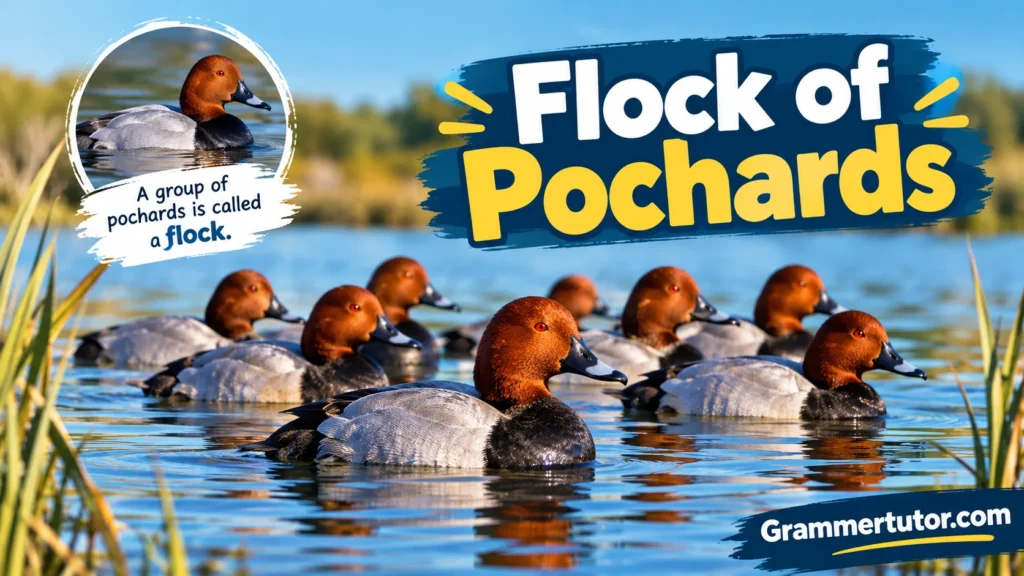
A flock of pochards is the most straightforward expression for describing several pochards together. The word flock is commonly used for birds that gather for feeding, resting, traveling, or other activities. It is suitable for educational articles, wildlife observations, and everyday conversations.
Pochards may form gatherings on lakes and wetlands where food and suitable resting places are available. Depending on the species and season, they may also gather with other waterbirds. Using the word flock makes these observations easy to communicate.
Examples of “Flock of Pochards”
- A flock of pochards swam across the lake.
- We spotted a flock of pochards near the reeds.
- The flock of pochards searched for food in the wetland.
- A flock of pochards rested on the water.
- The flock of pochards arrived at the pond early in the morning.
- A flock of pochards moved toward the deeper water.
- The birdwatcher photographed a flock of pochards.
- A flock of pochards gathered near the lake’s edge.
- The flock of pochards disappeared behind the vegetation.
- We watched a flock of pochards swimming peacefully together.
Raft of Pochards
A raft of pochards is a descriptive expression for pochards floating together on the surface of a lake or pond. The word raft is used for groups of waterbirds resting or gathering on water, making it an appropriate choice when describing their position rather than their flight or movement on land.
Pochards are well adapted to aquatic environments, and a gathering of these ducks can create an attractive scene for birdwatchers. The expression raft helps readers picture several birds floating close together on calm water.
Although raft is a useful collective expression, it is not a term reserved exclusively for pochards.
Examples of “Raft of Pochards”
- A raft of pochards floated quietly on the lake.
- We observed a raft of pochards near the shoreline.
- The raft of pochards rested on the calm water.
- A raft of pochards drifted toward the reeds.
- The photographer captured a raft of pochards at sunrise.
- A raft of pochards gathered in the middle of the pond.
- The raft of pochards moved slowly across the lake.
- We watched a raft of pochards near the wetland vegetation.
- A raft of pochards created gentle ripples on the water.
- The raft of pochards remained near the shore throughout the morning.
Group of Pochards
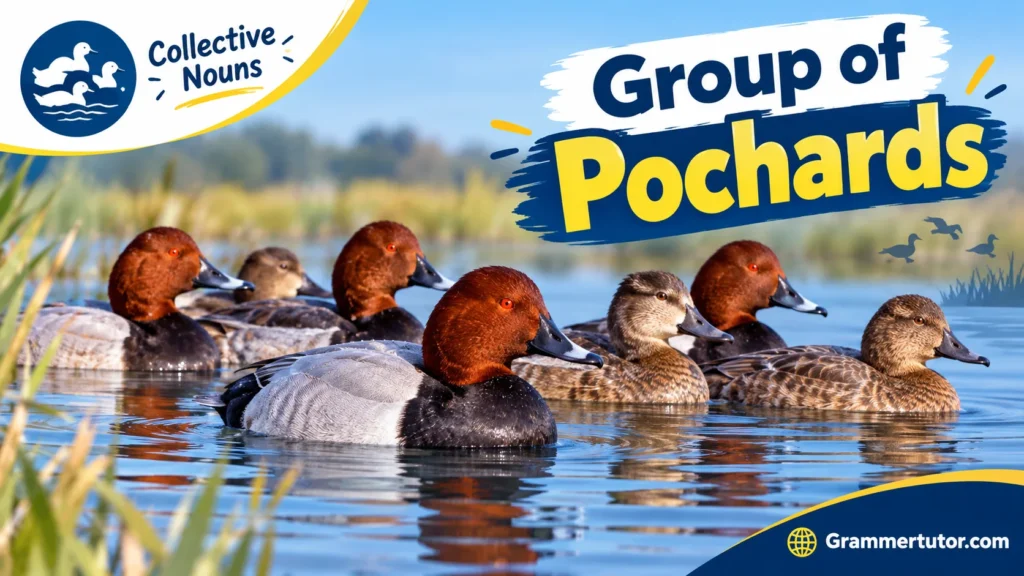
A group of pochards is a simple, general expression for several of these ducks gathered together. It is grammatically correct and particularly useful when the birds’ activity is unknown or when a writer wants to avoid uncommon or specialized terminology.
The word group is widely understood and can be used in scientific explanations, classroom assignments, nature reports, and everyday English. Although flock is more specifically associated with birds, group remains a natural alternative.
Examples of “Group of Pochards”
- A group of pochards swam near the riverbank.
- We saw a group of pochards during our nature walk.
- A group of pochards searched for aquatic plants.
- The group of pochards rested beside the lake.
- A group of pochards visited the wetland in winter.
- The children counted a group of pochards on the pond.
- A group of pochards moved through the shallow water.
- The group of pochards attracted the attention of birdwatchers.
- A group of pochards fed among the aquatic vegetation.
- We photographed a group of pochards in their natural habitat.
Interesting Facts About Pochards
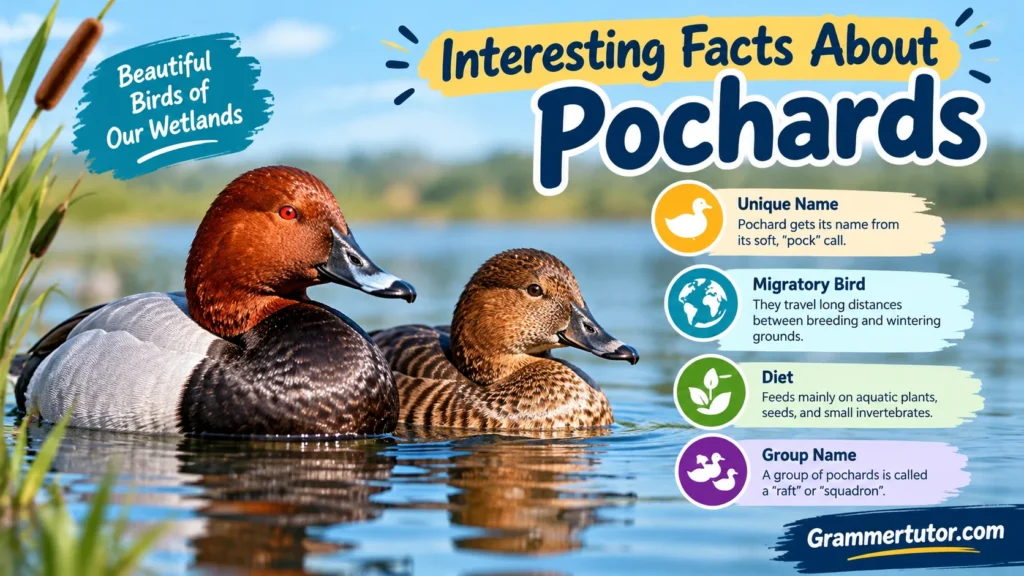
Pochards are members of the diving-duck group and belong to the duck family, Anatidae. Several species exist, including the Common Pochard and the Redhead, which are found in different regions of the world. These birds are closely associated with lakes, freshwater wetlands, marshes, and other aquatic habitats. Their relationship with water explains why expressions such as flock of pochards and raft of pochards are useful when describing their behavior.
One of the most interesting features of pochards is their ability to dive beneath the water to find food. Their webbed feet help propel them through the water, while their streamlined bodies support efficient swimming and diving. Their dense, water-resistant plumage helps protect them from cold and wet conditions. Depending on the species, males and females may also have different plumage patterns, especially during the breeding season.
Pochards have varied diets that can include aquatic plants, seeds, roots, insects, mollusks, and other small aquatic animals. Their exact food preferences depend on the species, season, and habitat. Diving enables them to reach food below the surface, while their use of wetlands provides access to feeding and resting areas.
Their longevity also varies by species and individual circumstances. Some pochards survive for several years in the wild, while others face threats from predators, disease, severe weather, hunting, and habitat loss. The availability of suitable wetlands and food can influence their survival, breeding success, and overall lifespan. For this reason, it is more accurate to discuss their longevity in relation to a particular species rather than assign one lifespan to all pochards.
Pochards may gather in groups for feeding, resting, migration, or seasonal movements. Some species form larger gatherings during the nonbreeding season, particularly where wetlands provide abundant food and safe resting places. Observing these gatherings helps birdwatchers connect collective nouns with actual bird behavior and appreciate the ecological importance of healthy aquatic habitats.
Quick Pochard Facts
- Pochards are diving ducks belonging to the family Anatidae.
- They are commonly associated with lakes, ponds, and wetlands.
- Flock is the most useful general collective noun for pochards.
- Raft can describe pochards floating together on water.
- Their webbed feet help them swim and dive.
- Their diets can include aquatic plants, seeds, and small aquatic animals.
- Many pochards dive underwater to obtain food.
- Their lifespan varies by species and environmental conditions.
- Some species travel seasonally between breeding and wintering habitats.
- Healthy wetlands provide essential feeding, resting, and breeding areas.
Conclusion
Collective noun for pochards is commonly flock, while raft describes pochards floating together on water. Learning these terms improves English vocabulary and helps us appreciate pochards’ diving abilities, feeding habits, and social behavior. These fascinating waterbirds remind us of the close connection between language and nature.
FAQs
Q1. What is the collective noun for pochards?
The most common collective noun is flock. For example, “A flock of pochards swam across the lake.”
Q2. What is a group of pochards called?
A group of pochards can be called a flock of pochards. The general expression group of pochards is also correct.
Q3. Is “flock of pochards” grammatically correct?
Yes. Flock is a standard collective noun for birds, and “a flock of pochards” is grammatically correct.
Q4. Can I use “raft of pochards” as a collective noun?
Yes. Raft is a descriptive expression for waterbirds floating together. It is suitable when pochards are gathered on the surface of a lake or pond.
Q5. Is “group of pochards” correct English?
Yes. Group is a general collective noun that can describe pochards gathered in any setting, whether they are feeding, swimming, or resting.
Q6. Where do pochards usually live?
Pochards inhabit aquatic environments such as lakes, ponds, reservoirs, marshes, and wetlands. Their preferred habitats vary by species.
Q7. Do pochards live in flocks?
Pochards may gather in flocks, especially during feeding, migration, resting, and the nonbreeding season. The size of these gatherings depends on the species and environmental conditions.
Q8. What do pochards eat?
Their diet may include aquatic plants, seeds, roots, insects, mollusks, and other small aquatic animals. Their exact diet varies with the species and habitat.
Q9. How long do pochards live?
Pochard longevity varies by species and individual circumstances. Food availability, habitat quality, predators, disease, and weather can affect their lifespan.
Q10. Why should I learn collective nouns for pochards?
Learning collective nouns improves English vocabulary and helps you describe birds more clearly. It also connects language learning with an appreciation of pochards‘ social behavior, diving adaptations, and wetland habitats.