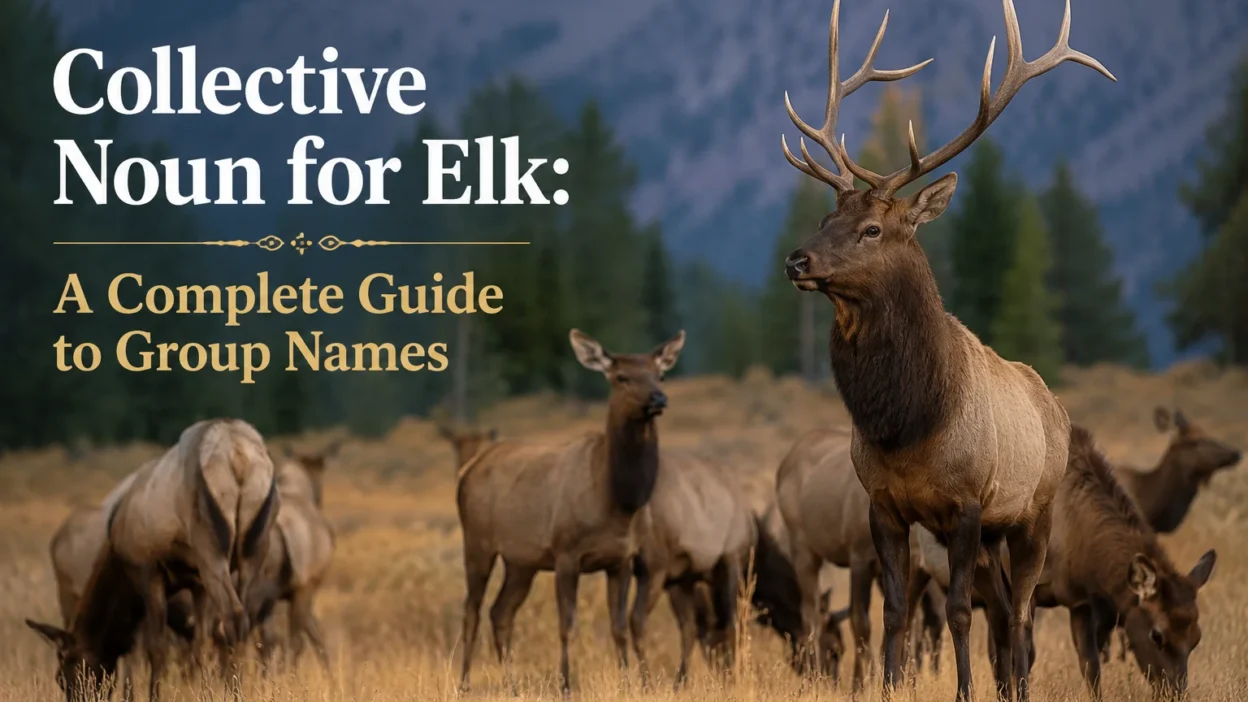
The collective noun for elk is herd, a natural term for a group of elk living, grazing, traveling, or resting together.Elk are large, powerful members of the deer family, and their social nature makes group living important. In English, herd is the most common collective noun used to describe elk when they gather together.
You may see these animals grazing across open grasslands, moving through forests, or traveling across mountains. Such expressions make descriptions more specific and vivid, especially in particular contexts involving elk in the wild.The group structure of elk can change with the season, age, and sex of the animals. These highly social animals may form different groups as conditions change.
Learning the main collective nouns, along with simple examples, can make your English more natural and improve your understanding of elk behavior. Looking at fascinating facts about their bodies, diet, lifespan, and behavior also gives useful context for understanding why these animals live and interact in groups.
Why Collective Nouns Are Used for Elk
Elk are social members of the deer family and often gather in groups. During different parts of the year, males and females may form separate groups, while larger gatherings can occur during seasonal movements and breeding periods.
Because elk frequently travel, feed, and rest together, herd is the most useful general collective noun. Other descriptive terms can be used when the writer wants to focus on the size, movement, or setting of the group.
Collective nouns make animal descriptions easier to visualize. Saying a herd of elk crossed the valley immediately creates a clearer picture than simply saying some elk crossed the valley.
Collective Nouns for Elk
| Collective Noun | Used For | Simple Example |
| Herd | A group of elk living or moving together | A herd of elk crossed the meadow. |
| Gang | An informal term for a group of elk | A gang of elk moved through the forest. |
| Mob | A large or tightly gathered group | A mob of elk gathered near the river. |
| Group | A general collection of elk | A group of elk rested on the hillside. |
| Band | A group traveling or staying together | A band of elk moved across the valley. |
Herd of Elk
A herd is the most common and natural collective noun for elk. It describes elk that gather together for feeding, traveling, resting, protection, or other social activities.
Elk herds can vary greatly in size. Their group structure also changes throughout the year. For example, females and young elk may form groups, while adult males may spend time in separate groups outside the breeding season.
Examples of “Herd of Elk”
- A herd of elk grazed in the meadow.
- We watched a herd of elk near the mountains.
- The herd of elk crossed the valley.
- A large herd of elk moved through the forest.
- The herd of elk rested beneath the trees.
- A herd of elk gathered near the river.
- The photographer followed a herd of elk from a distance.
- A herd of elk traveled across the grassland.
- The herd of elk disappeared into the woods.
- Rangers observed a herd of elk at dawn.
Gang of Elk
Gang can be used informally to describe a group of elk. It gives the group a casual or lively character and may appear in descriptive or creative writing.
For standard wildlife writing, however, the herd is usually the safer and more widely recognized choice.
Examples of “Gang of Elk”
- A gang of elk moved through the forest.
- We spotted a gang of elk near the hillside.
- The gang of elk crossed the trail.
- A gang of elk gathered near the trees.
- The gang of elk traveled toward the valley.
- A gang of elk rested in the shade.
- The hikers watched a gang of elk from afar.
- A gang of elk moved across the open field.
- The gang of elk disappeared into the forest.
- A gang of elk approached the water.
Mob of Elk
Mob is another descriptive expression that can refer to a large or closely gathered group of animals. When used for elk, it emphasizes the number or density of animals rather than their ordinary social structure.
Because mob isn’t as common as herd, it’s better suited to informal or descriptive writing.
Examples of “Mob of Elk”
- A mob of elk gathered near the meadow.
- We saw a mob of elk crossing the valley.
- The mob of elk moved toward the forest.
- A large mob of elk gathered near the river.
- The mob of elk traveled through the grassland.
- A mob of elk rested on the hillside.
- The wildlife photographer observed the mob of elk.
- The mob of elk crossed the open field.
- A mob of elk moved away from the road.
- The mob of elk disappeared among the trees.
Group of Elk
A group of elk is a simple and completely understandable expression. Unlike herd, it isn’t a specialized collective noun, but it works well when you don’t need a more descriptive term.
You can use groups in everyday conversation, educational writing, or situations where the exact type of gathering isn’t important.
Examples of “Group of Elk”
- A group of elk stood near the trees.
- We saw a group of elk in the valley.
- The group of elk moved toward the river.
- A group of elk grazed peacefully.
- The group of elk rested on the hillside.
- A group of elk crossed the road.
- The researchers observed a group of elk.
- A group of elk walked through the forest.
- The group of elk disappeared into the meadow.
- A group of elk gathered at dawn.
Band of Elk
A band of elk can be used as a descriptive expression for elk traveling or remaining together. The word band emphasizes a collection of animals moving as a unit.
It isn’t as common as a herd, so when you’re writing a straightforward sentence, a herd of elk is generally the better choice.
Examples of “Band of Elk”
- A band of elk crossed the valley.
- We saw a band of elk near the mountains.
- The band of elk moved through the forest.
- A band of elk traveled across the meadow.
- The band of elk rested beneath the trees.
- A band of elk gathered near the water.
- The hikers watched a band of elk from a distance.
- A band of elk moved toward the hills.
- The band of elk crossed the grassland.
- A band of elk disappeared into the woods.
How Elk Behave in Groups
Elk are social animals, and their group behavior changes throughout the year. Female elk, called cows, often live with their young, while adult males, called bulls, may form separate groups outside the breeding season.
During the breeding season, known as the rut, bulls become much more active and compete for access to females. They may display their strength, make loud bugling calls, and compete with other males. These behaviors make autumn one of the most fascinating times to observe elk.
Elk also use group living as a way to improve awareness of their surroundings. Multiple animals can watch for potential danger while others feed or rest. When one elk becomes alert, other members of the group may quickly respond.
Elk communicate through vocalizations, body movements, scent, and physical displays. Their famous bugle is especially associated with bulls during the rut.
Examples of Elk Behavior
- Elk often gather in social groups.
- Female elk may travel with their young.
- Bulls can form groups outside the breeding season.
- Elk communicate through sounds and body language.
- Bulls bugle during the rut.
- Elk may gather in large herds.
- A herd can provide greater awareness of danger.
- Elk often graze together.
- Young elk stay close to their mothers.
- Elk change their group behavior throughout the year.
Interesting Facts About Elk
Elk are among the largest members of the deer family and are native to parts of North America and eastern Asia. They are powerful animals with long legs, large bodies, and impressive antlers in adult males. Elk can live for many years in the wild, although lifespan varies according to habitat, food availability, disease, predators, hunting pressure, and other environmental conditions. Their size and strong bodies help them survive in a wide range of habitats.
One of the most distinctive physiological features of male elk is their antlers. Bulls grow a new set of antlers every year. These structures are made of bone and can become remarkably large. During the breeding season, bulls use their antlers in displays and physical contests with rivals. Antler growth is supported by a temporary layer of highly vascularized tissue called velvet, which supplies nutrients and oxygen while the antlers develop.
Elk are also well adapted for movement. Their long legs allow them to travel across forests, meadows, mountains, and open terrain. Their hooves help them move over uneven ground, while their strong muscles allow them to run and navigate challenging landscapes. Elk can also swim when necessary, showing how adaptable they are in different environments.
Their dietary habits are another important part of their biology. Elk are herbivores and eat a variety of vegetation, including grasses, leaves, shrubs, bark, and other plant material. Their exact diet changes according to the season and what vegetation is available. During warmer months, they may consume abundant grasses and leafy plants, while winter can require them to rely more heavily on woody vegetation.
Elk are ruminants, meaning their digestive system is specially adapted to process fibrous plant foods. They have a multi-chambered stomach and regurgitate partially digested food so it can be chewed again. This process, called cud chewing, helps them extract nutrients from tough vegetation.
Elk also play an important role in their ecosystems. By feeding on vegetation, moving through landscapes, and interacting with plant communities, they can influence the structure of their habitats. Their presence also supports predators and scavengers that depend on large herbivores as part of the food web.
Examples of Elk Facts
- Elk are members of the deer family.
- A group of elk is commonly called a herd.
- Male elk are called bulls.
- Female elk are called cows.
- Young elk are called calves.
- Bulls grow new antlers every year.
- Elk are herbivores.
- Elk are ruminants.
- Elk eat grasses, leaves, shrubs, and other vegetation.
- Bulls produce distinctive bugling sounds during the rut.
Conclusion
The most common collective noun for elk is herd. You can say a herd of elk when describing these social animals as they graze, travel, rest, or move together. Understanding this simple term makes your English more natural and helps you describe elk clearly in different situations.
FAQs
Q1. What is the collective noun for elk?
The most common collective noun for elk is herd. The usual phrase is a herd of elk.
Q2. What do you call a group of elk?
A group of elk is commonly called a herd of elk.
Q3. Is “herd of elk” grammatically correct?
Yes. Herd of elk is grammatically correct and is the standard way to describe a group of elk.
Q4. Why are elk called a herd?
Elk are social animals that often live, feed, travel, and rest together. Herd is commonly used for groups of animals that live and move together.
Q5. Can I use “group of elk” instead of “herd of elk”?
Yes. The group of elk is understandable, but the herd of elk is more specific and natural when referring to elk collectively.
Q6. Do male and female elk stay in the same herd?
Not always. Elk may form different social groups depending on factors such as season, age, and sex. During some periods, males and females may spend time in separate groups.
Q7. How do you use “herd” in a sentence?
You can say: “A herd of elk was grazing across the grassland.”
Q8. Are elk social animals?
Yes. Elk are highly social animals and commonly interact and live in groups, although their group structure can change throughout the year.
Q9. Where might you see a herd of elk?
You may find elk in forests, mountains, and open grasslands. Their habitat and movements can vary depending on the season and local conditions.
Q10. Is “herd” the only term used for elk?
Herd is the main and most widely recognized collective noun for elk. Other descriptions may appear in specific contexts, but herds of elk is the safest standard expression.