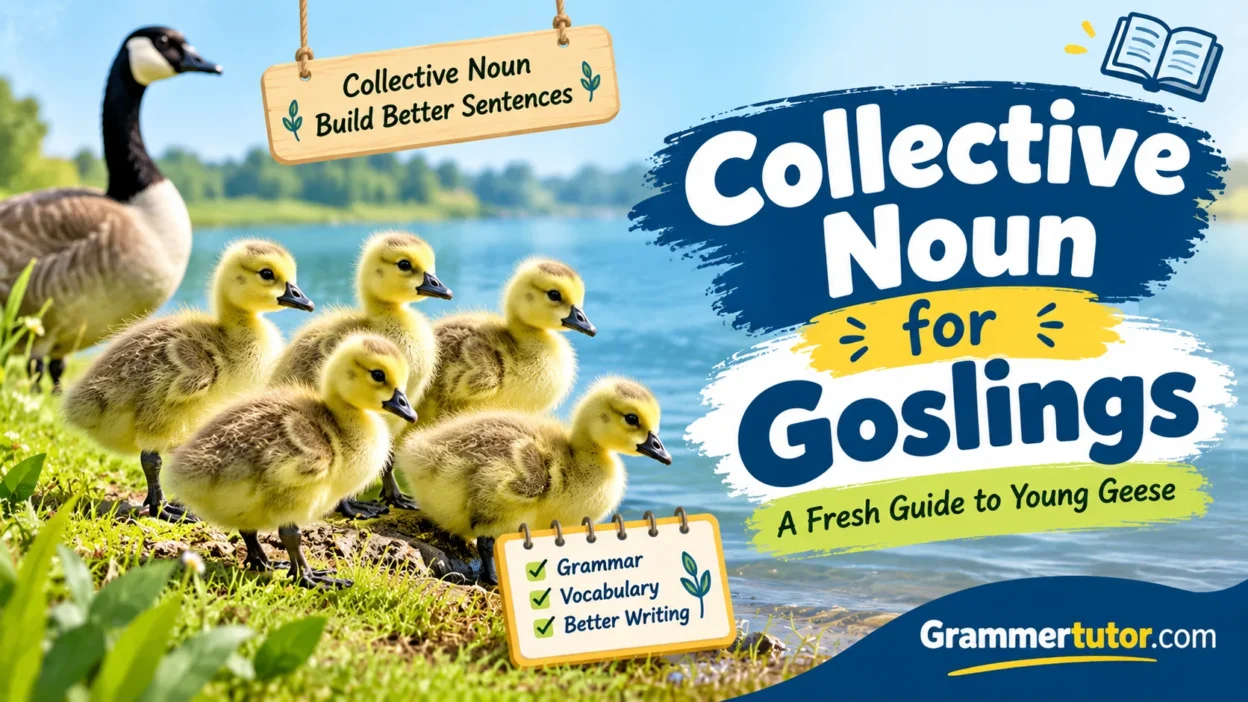
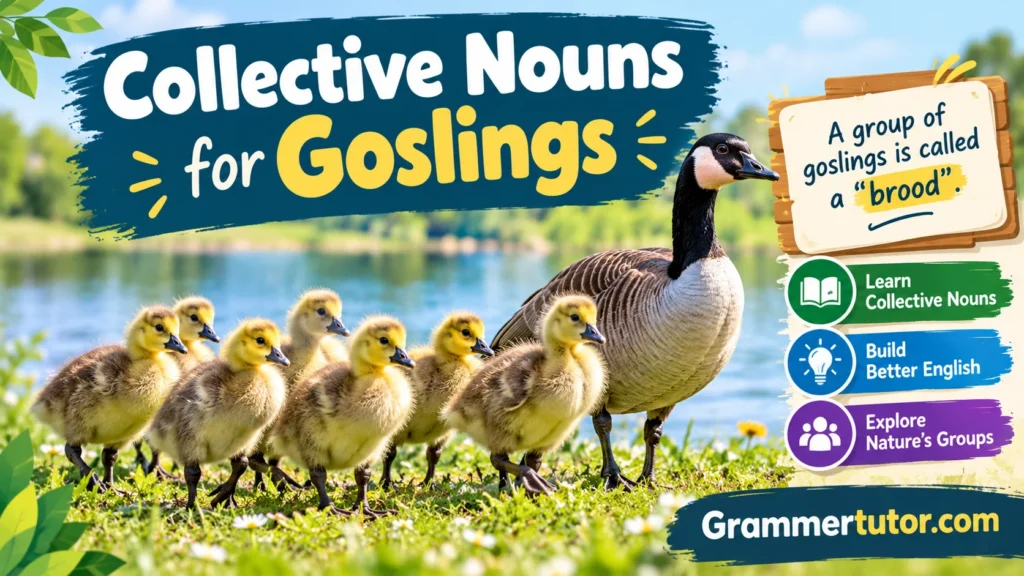
The collective noun for goslings helps describe young geese gathered near a pond, grassy bank, or nesting area. A brood of goslings is a common term for young birds staying close to their parents during the early stages of life. Other expressions, such as flock, gaggle, group, and family, can describe how these fluffy waterbirds gather together. Each term gives you a different way to talk about several baby geese in their natural surroundings.
These group expressions have slightly different meanings. A brood usually refers to young birds cared for by their parents, while a flock describes birds gathered or moving together. A gaggle is another familiar term associated with geese, especially when they gather on land. You can use these phrases and terms to describe their movement, feeding habits, and family relationships. Observing how goslings interact with one another can also help you understand their behavior as young animals living in a shared habitat.
Learning the collective noun for geese and other expressions associated with goslings can improve your English vocabulary and support language learning. These terms are useful when writing an animal article, completing a school assignment, or studying grammar. They also help with article writing, grammar study, and creating clear animal descriptions. By choosing suitable group terms and using accurate descriptive language, you can write more engaging wildlife descriptions about birds, their parents and offspring, and the fascinating lives of goslings near water.
Why Collective Nouns Are Used for Goslings
Goslings often stay close to their parents while exploring their surroundings, searching for food, and learning essential survival skills. Since several young birds may travel together, collective expressions help writers describe them without mentioning each bird separately.
The word brood is especially appropriate when referring to young birds belonging to the same parents. A flock describes a gathering of birds more generally, while gaggle is traditionally associated with geese, particularly when they are on the ground.
These expressions make sentences more concise and help readers picture the birds’ relationships, movements, and surroundings.
Collective Nouns for Goslings
| Collective Noun | Used For | Simple Example |
| Brood | Young birds cared for by their parents | A brood of goslings followed their mother. |
| Flock | Birds gathered or traveling together | A flock of goslings crossed the grass. |
| Gaggle | Geese gathered together, especially on land | A gaggle of goslings rested beside the pond. |
| Group | A general gathering of young geese | A group of goslings explored the garden. |
| Family | Goslings staying with their parents | A family of goslings swam across the lake. |
Brood of Goslings
A brood of goslings refers to young geese associated with the same parents. This expression highlights the relationship between the baby birds and their family. It is especially useful when describing newly hatched goslings following their mother or father.
Examples of “Brood of Goslings”
- A brood of goslings followed their mother across the lawn.
- The farmer spotted a brood of goslings beside the barn.
- A brood of goslings rested beneath a willow tree.
- The mother goose guided her brood toward the water.
- A brood of goslings searched for tender grass.
- The children watched a brood of goslings near the pond.
- A brood of goslings huddled together on the riverbank.
- The wildlife photographer photographed a brood of goslings at sunrise.
- A brood of goslings stayed close to their protective parents.
- The young birds formed a brood near the nesting area.
Flock of Goslings
A flock of goslings describes several young geese gathered or moving together. The word flock is widely used for groups of birds and works naturally when the exact family relationship is unknown.
This expression is useful for describing goslings feeding in an open field, walking along a shoreline, or moving between resting places.
Examples of “Flock of Goslings”
- A flock of goslings wandered across the meadow.
- Several visitors admired a flock of goslings near the lake.
- A flock of goslings gathered around a shallow pool.
- The farmer noticed a flock of goslings near the fence.
- A flock of goslings moved toward the reeds.
- The children counted a flock of goslings beside the stream.
- A flock of goslings searched the grass for food.
- The birds formed a flock along the muddy shoreline.
- A flock of goslings followed a narrow garden path.
- The morning sunlight illuminated a flock of goslings near the water.
Gaggle of Goslings
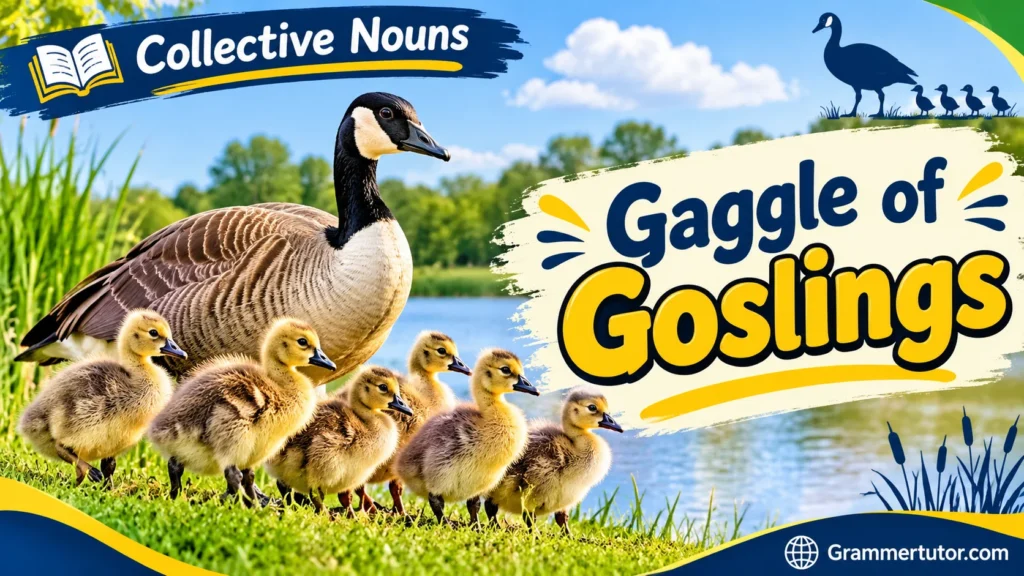
A gaggle of goslings is an understandable expression based on the traditional collective noun gaggle of geese. The term is most strongly associated with geese gathered on the ground rather than with goslings specifically.
It can add variety to descriptive writing, although brood of goslings is more precise when the young birds belong to the same parents.
Examples of “Gaggle of Goslings”
- A gaggle of goslings waddled beside the pond.
- We observed a gaggle of goslings near the farmyard.
- A gaggle of goslings gathered around their feeding area.
- The gardener watched a gaggle of goslings cross the path.
- A gaggle of goslings explored the grassy enclosure.
- The children laughed as a gaggle of goslings approached.
- A gaggle of goslings rested beside the wooden fence.
- The caretaker guided a gaggle of goslings away from the road.
- A gaggle of goslings searched for food near the reeds.
- The visitors photographed a gaggle of goslings on the bank.
Group of Goslings
A group of goslings is a straightforward expression for several young geese seen together. Although group is a general noun rather than a specialized bird term, it is grammatically correct and easy for readers to understand.
Use this phrase when describing a gathering without specifying whether the birds belong to the same family or are part of a larger flock.
Examples of “Group of Goslings”
- A group of goslings played near the water’s edge.
- The wildlife guide noticed a group of goslings in the reeds.
- A group of goslings rested on a sunny patch of grass.
- We saw a group of goslings near the walking trail.
- A group of goslings followed the older geese.
- The children drew a group of goslings in their notebooks.
- A group of goslings gathered beneath the bridge.
- The caretaker checked a group of goslings in the enclosure.
- A group of goslings paddled around the shallow pond.
- The young birds formed a group beside the nesting site.
Family of Goslings
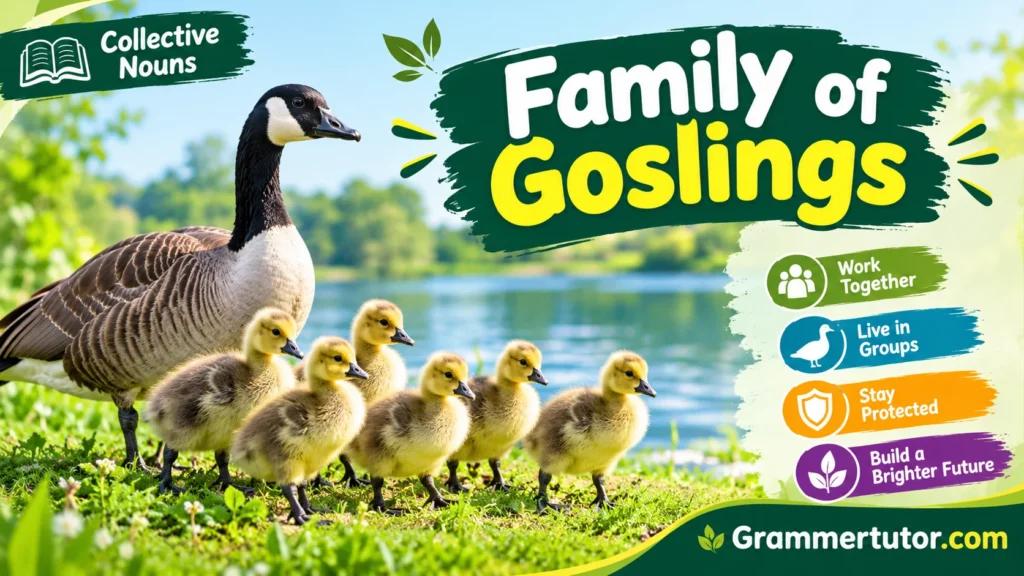
A family of goslings describes young geese living or traveling with their parents. Although family is a general descriptive expression rather than a specialized collective noun, it communicates the close relationship between the adult birds and their offspring.
Geese often provide parental care during early development, helping their goslings find food and stay protected from potential dangers.
Examples of “Family of Goslings”
- A family of goslings crossed the peaceful lake.
- The family of goslings rested near the riverbank.
- A family of goslings followed their parents through the grass.
- We watched a family of goslings swimming together.
- A family of goslings settled beneath the trees.
- The photographer captured a family of goslings at dawn.
- A family of goslings searched for plants beside the pond.
- The family of goslings moved away from the busy path.
- A family of goslings explored the edge of the wetland.
- The children quietly observed a family of goslings near the reeds.
Types of Geese and Their Young
Geese belong to the waterfowl group and are members of the bird family Anatidae. Different goose species inhabit wetlands, lakes, rivers, grasslands, and agricultural areas. Familiar examples include Canada geese, greylag geese, snow geese, and domestic geese. Their appearance, migration patterns, and habitat preferences vary by species.
A gosling is a young goose, especially one that has not yet developed its adult plumage. Newly hatched goslings are commonly covered in soft down, which helps insulate their bodies. As they grow, they gradually develop feathers and become more capable of swimming, walking, and exploring independently.
Adult geese generally provide protection and guidance while their young develop. The parents may lead goslings toward suitable feeding areas, keep them together, and warn them when danger approaches.
Examples of Goose Characteristics
- Goslings hatch from eggs laid by female geese.
- Newly hatched goslings are covered in soft down.
- Many geese spend time near freshwater wetlands.
- Goslings can walk soon after hatching.
- Young geese often remain close to their parents.
- Adult geese may use warning calls when danger appears.
- Many goose species feed on grasses and aquatic vegetation.
- Some geese migrate between seasonal habitats.
- Goslings gradually develop adult feathers as they mature.
- Families may travel together while the young birds grow.
Interesting Facts About Goslings
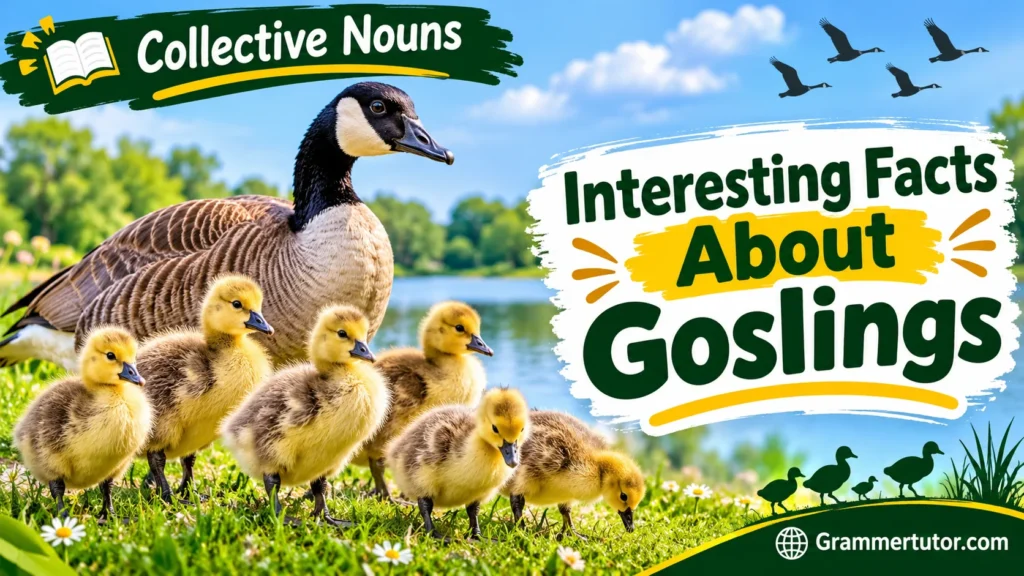
Goslings have several remarkable biological characteristics that help them survive during their early lives. Their lifespan depends on the goose species, environmental conditions, predators, disease, and access to food. Some wild geese survive for many years, while protected domestic geese may live considerably longer. Goslings themselves are particularly vulnerable during their first weeks, making parental protection important for their survival.
One distinctive feature of newly hatched goslings is their soft covering of down feathers. These feathers provide insulation and help keep the young birds warm. Goslings also have webbed feet, which help them paddle through water, while their bills are adapted for gathering and eating suitable food. As their bodies develop, they gradually replace their juvenile down with more mature feathers.
Their diet changes as they grow, but many goslings eat grasses, tender shoots, leaves, aquatic plants, and other vegetation. Depending on the species and local environment, they may also consume small invertebrates. Access to nutritious food supports healthy growth, feather development, and energy for swimming and walking.
Goslings also display interesting social behavior. They commonly remain close to their parents and may travel alongside siblings while exploring their habitat. Adult geese help guide and protect their young, making the phrase brood of goslings particularly useful when describing a family of young birds. Understanding these behaviors connects English vocabulary with the natural lives of geese.
READ MORE: Collective Noun for Oxbirds: A Complete Guide with Examples
Conclusion
Understanding the collective noun for goslings helps you describe groups of young geese clearly and accurately. A brood of goslings is a suitable term for young geese cared for by their parents, while flock, gaggle, and group can describe geese gathered in different situations. Learning these expressions improves your English vocabulary and makes your writing about birds and wildlife more engaging. Whether you are writing an article, completing a school assignment, or studying grammar, choosing the right collective noun helps you communicate your ideas in simple, natural English.
FAQs
Q1. What is the collective noun for goslings?
Brood is a suitable collective noun for goslings, especially when referring to young geese belonging to the same parents. For example: A brood of goslings followed their mother.
Q2. Can I use “flock of goslings”?
Yes. A flock of goslings is a natural expression for several young geese gathered or moving together. It does not necessarily imply that they belong to the same family.
Q3. Is “gaggle of goslings” correct?
It is understandable, based on the established expression gaggle of geese. However, gaggle is traditionally associated with geese generally, while brood is more precise for young birds cared for by their parents.
Q4. What is a baby goose called?
A baby goose is called a gosling. The word refers to a young goose, particularly during its early stage of development.
Q5. What do goslings eat?
Goslings commonly eat tender grass, leaves, shoots, and aquatic vegetation. Their exact diet varies according to their species, age, and available food.