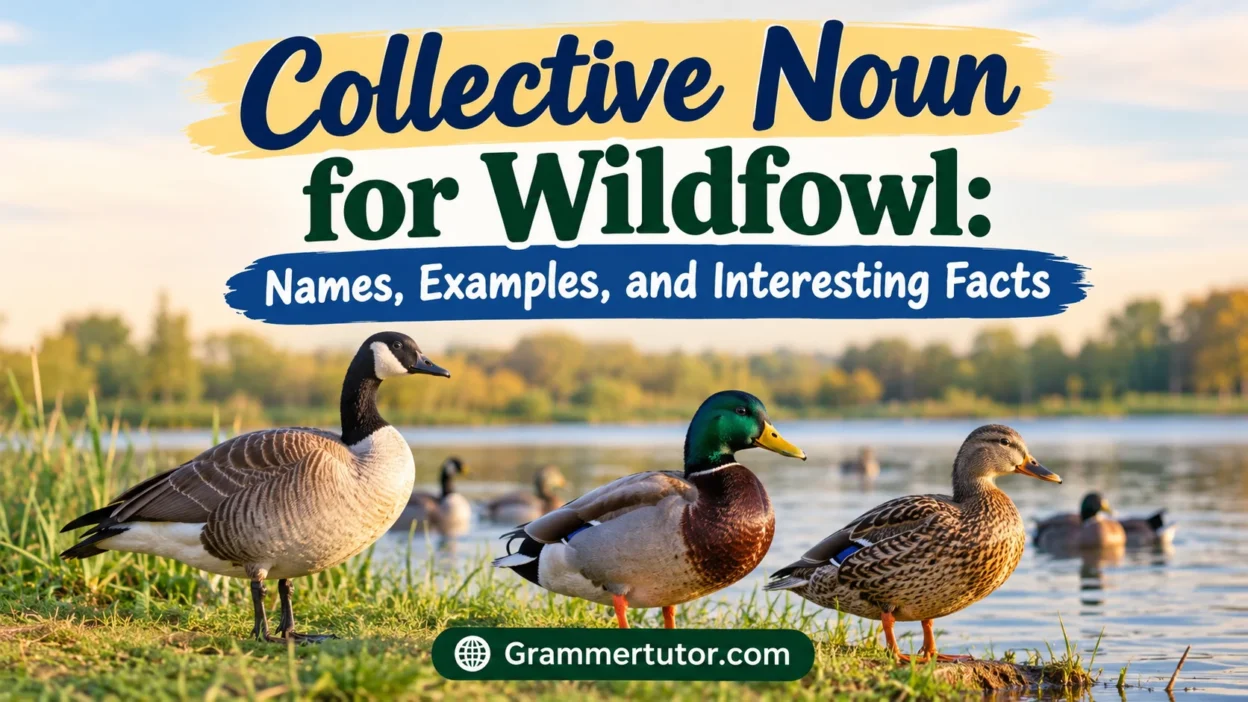
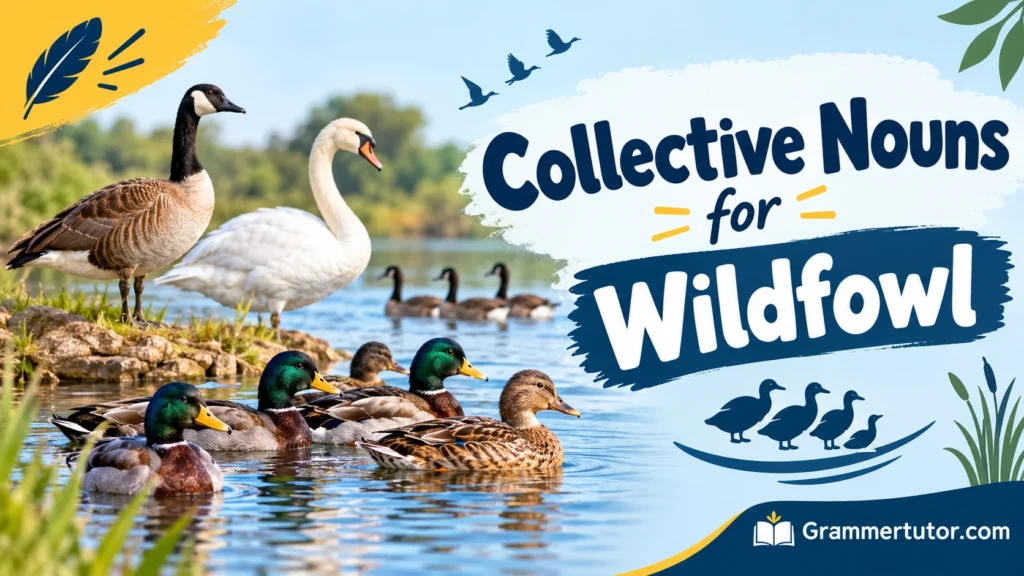
The collective noun for wildfowl helps describe groups of ducks, geese, and swans in simple and clear English. These terms make writing more natural and interesting.
A flock is a common word for a group of wildfowl, especially when ducks or other water birds swim together on a pond or fly across the sky. The word gaggle is traditionally used for geese gathered on land, while skein often describes geese flying together in a line or formation. Each word helps readers understand how birds gather and move in different situations.
When I describe wildfowl, I find that choosing the right collective noun makes the scene easier to imagine. For example, a flock of ducks swimming across a pond creates a different picture from a gaggle of geese feeding on land or a skein of geese flying overhead. Learning these expressions builds vocabulary, improves writing skills, and helps people describe birdwatching experiences, wildlife habitats, and animal behavior more accurately.
Why Collective Nouns Are Used for Wildfowl
Wildfowl often gather around lakes, rivers, marshes, coastal wetlands, and ponds. These environments provide food, shelter, nesting locations, and suitable places for resting. Because many species travel or feed together, collective nouns offer a convenient way to describe their gatherings.
The word flock is a versatile choice for a general group of wildfowl. More specific expressions, including gaggle for geese on the ground and skein for geese flying in formation, can provide additional detail.
Selecting an appropriate term helps readers picture the birds more clearly. These expressions are particularly useful for students, nature writers, teachers, and anyone interested in wildlife vocabulary.
Collective Nouns for Wildfowl
| Collective Noun | Used For | Simple Example |
| Flock | A general gathering of wildfowl | A flock of ducks swam across the lake. |
| Gaggle | Geese gathered on land | A gaggle of geese grazed beside the pond. |
| Skein | Geese flying together | A skein of geese crossed the sky. |
| Wedge | Birds flying in a V-shaped formation | A wedge of wildfowl flew overhead. |
| Raft | Ducks or other waterbirds floating together | A raft of ducks rested on the water. |
Flock of Wildfowl
A flock of wildfowl is the most versatile expression for describing several water-associated birds together. It can refer to ducks, geese, or other birds that gather for feeding, resting, or migration. This word works well in everyday conversation and general wildlife writing.
Examples of “Flock of Wildfowl”
- A flock of wildfowl landed beside the lake.
- We watched a flock of ducks swimming peacefully.
- A flock of wildfowl searched for food in the marsh.
- The flock of birds moved toward the reeds.
- A flock of wildfowl rested on the river.
- Several children observed a flock near the pond.
- A flock of wildfowl flew across the wetlands.
- The flock gathered where the water was shallow.
- A flock of ducks followed their mother across the lake.
- The photographer captured a flock of wildfowl at sunrise.
Gaggle of Wildfowl
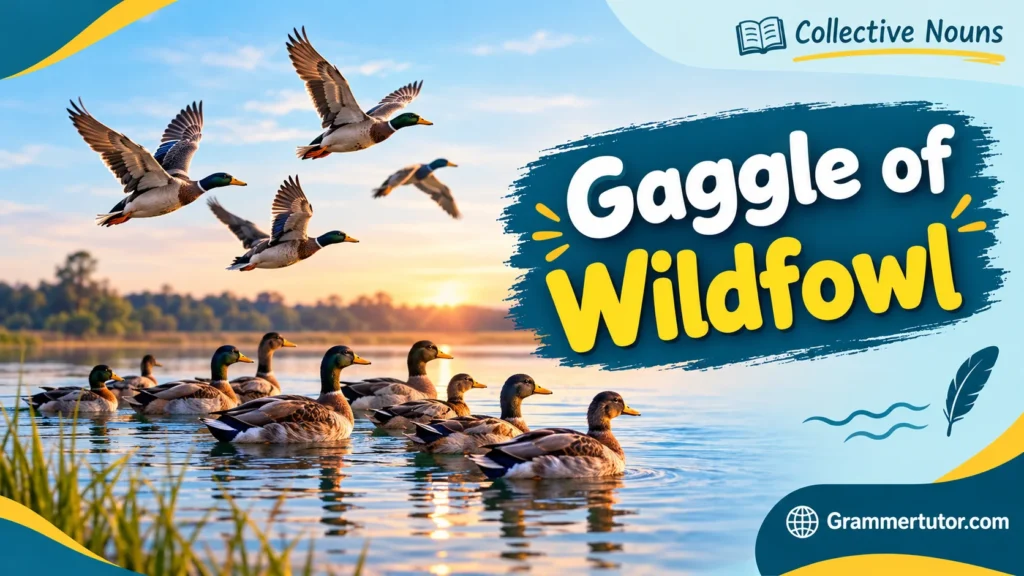
A gaggle is a traditional collective noun specifically associated with geese gathered on the ground. It is a colorful word that makes descriptions more precise when the birds are walking, feeding, or resting together.
Although gaggle is often used for domestic geese, it can also describe groups of wild geese on land.
Examples of “Gaggle of Wildfowl”
- A gaggle of geese grazed near the riverbank.
- The gaggle wandered across the grassy meadow.
- We noticed a gaggle of wild geese beside the pond.
- A gaggle gathered near the edge of the marsh.
- The gaggle made loud calls throughout the morning.
- A gaggle of geese searched for seeds in the field.
- The children watched a gaggle walking along the shore.
- A gaggle rested beneath the willow trees.
- The gaggle moved toward the water at sunset.
- A gaggle of geese crossed the open grassland.
Skein of Wildfowl
A skein is a specialized collective noun used for geese flying together, especially when they form a long line or curved formation across the sky. This expression is particularly useful when describing seasonal migration.
The word adds a vivid image to wildlife writing because it emphasizes the birds’ movement through the air.
Examples of “Skein of Wildfowl”
- A skein of geese appeared above the mountains.
- We saw a skein crossing the evening sky.
- The skein flew south before winter arrived.
- A skein of wild geese passed over the village.
- The birds formed a skein above the wetlands.
- A skein moved steadily toward warmer regions.
- The observer spotted a skein beyond the treetops.
- A skein of geese called loudly while flying.
- The skein disappeared behind the distant hills.
- A beautiful skein crossed the sky at dusk.
Wedge of Wildfowl
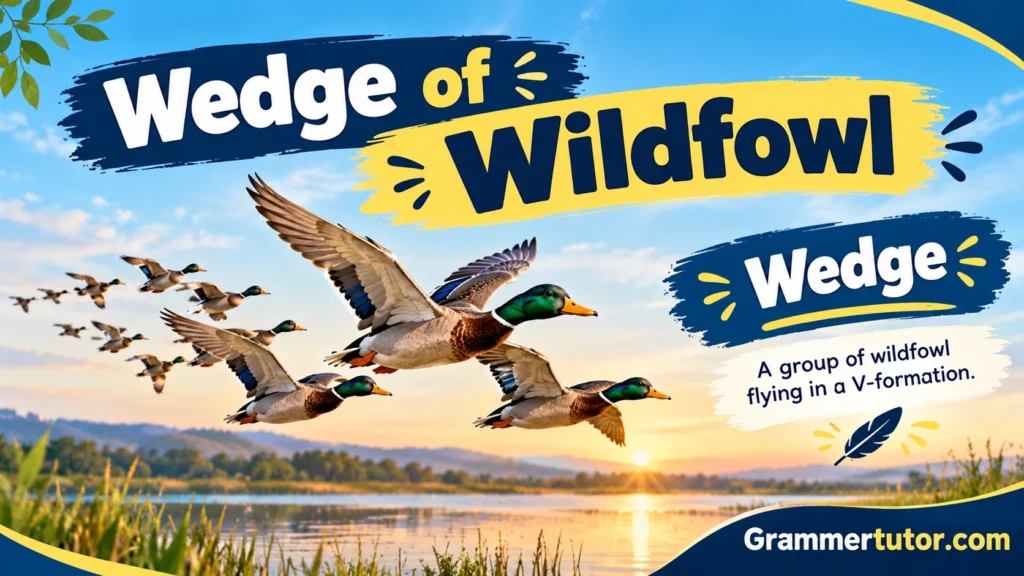
A wedge describes a group of birds flying in a V-shaped formation. Geese are particularly well known for this arrangement, which helps them coordinate their movements during long journeys.
This expression emphasizes the shape of the flying group rather than simply the number of birds present.
Examples of “Wedge of Wildfowl”
- A wedge of geese flew above the countryside.
- The wedge moved across the cloudy sky.
- We watched a wedge of birds heading south.
- A wedge of wildfowl passed over the river.
- The wedge maintained its formation during migration.
- A wedge of geese appeared beyond the hills.
- The birds formed a wedge above the farmland.
- A wedge flew toward the distant wetlands.
- The wedge changed direction near the mountains.
- We photographed a wedge of geese at sunset.
Raft of Wildfowl
A raft is a collective noun commonly used for ducks and certain other waterbirds floating together on the surface of a lake or other body of water. It describes a gathering that appears to rest on the water like a floating platform.
This term is especially useful for describing birds that gather in large numbers while feeding, resting, or staying safe from land-based predators.
Examples of “Raft of Wildfowl”
- A raft of ducks floated across the lake.
- We spotted a raft resting near the reeds.
- The raft drifted slowly toward the riverbank.
- A raft of waterbirds gathered in the bay.
- The birds formed a raft on the calm water.
- A raft of ducks rested beneath the morning sun.
- The raft moved away from the busy shoreline.
- Several visitors photographed a raft near the pier.
- A raft of ducks gathered where the lake was deep.
- The raft scattered when a boat approached.
Types of Wildfowl and Their Characteristics
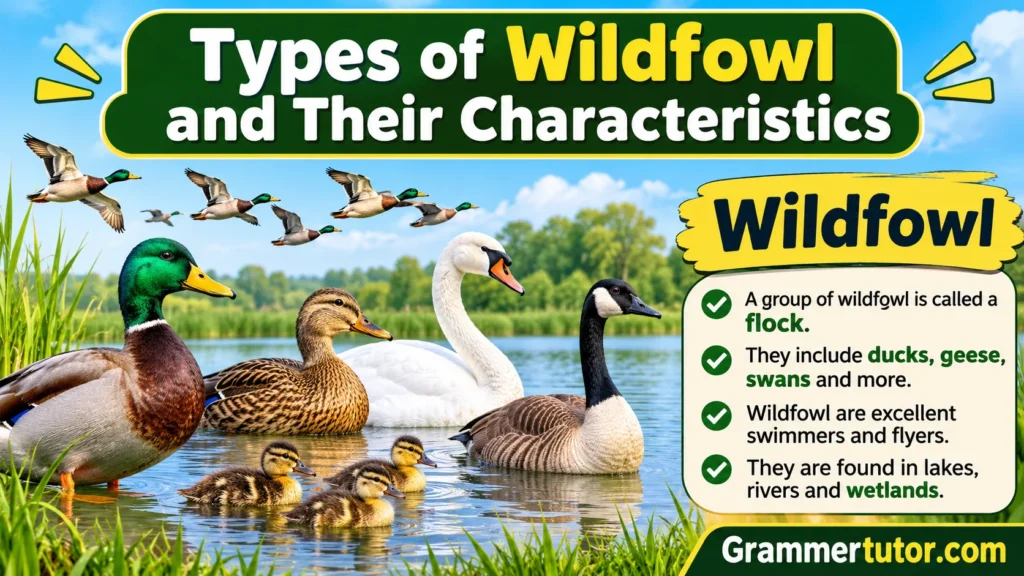
Wildfowl include a variety of birds adapted to aquatic environments. Ducks are generally recognized by their broad bills and webbed feet, which help them feed and move through water. Geese are often larger, with longer necks and strong bills suited to grazing and gathering vegetation. Swans are typically distinguished by their long necks, large bodies, and graceful movements.
Different species occupy different habitats. Some prefer freshwater lakes and marshes, while others inhabit coastal estuaries, tidal flats, and sheltered bays. Many wildfowl migrate between breeding and wintering grounds as temperatures and food supplies change.
Their diets also vary. Depending on the species, wildfowl may eat aquatic plants, grasses, seeds, insects, mollusks, and small aquatic animals. These feeding habits influence where they gather and how they interact with their surroundings.
Examples of Wildfowl Characteristics
- Ducks have broad bills suited to different feeding methods.
- Geese often graze on grasses and other vegetation.
- Swans possess long necks that help them reach underwater plants.
- Many wildfowl have webbed feet.
- Several species migrate seasonally.
- Wetlands provide important feeding and nesting grounds.
- Some ducks dive underwater to find food.
- Geese often communicate through loud calls.
- Certain wildfowl gather in large flocks during winter.
- Different species have distinct feeding preferences.
Interesting Facts About Wildfowl
Wildfowl have developed remarkable adaptations that help them survive in aquatic environments. Their lifespans vary by species, habitat quality, predation, disease, and human-related threats. Some smaller ducks live for several years, while certain geese and swans can survive for decades under favorable conditions. Longevity also depends on whether the birds live in the wild or under human care.
One notable physiological feature is their webbed feet, which help many species push against water while swimming. Their feathers also provide insulation and help repel moisture when properly maintained with oils produced by a preen gland. Many wildfowl have bills adapted to their preferred food sources, allowing them to filter small organisms, graze on vegetation, or capture aquatic prey.
Wildfowl diets differ widely. Mallards and many other ducks eat a mixture of seeds, aquatic plants, insects, and small invertebrates. Geese commonly consume grasses, leaves, and other vegetation, whereas swans often feed on aquatic plants. These dietary differences influence where each species spends time and which habitats are most important for its survival.
Group behavior is another fascinating aspect of wildfowl biology. Flocks can help birds locate feeding grounds and provide opportunities to detect approaching predators. During migration, some geese travel in coordinated formations, including V-shaped patterns. The terms flock, gaggle, skein, wedge, and raft allow English speakers to describe different aspects of these gatherings with greater precision.
Conclusion
Understanding the collective noun for wildfowl makes English writing clearer, more descriptive, and more engaging. Words such as flock, gaggle, and skein describe groups of birds in different situations. By learning these terms and using them in the right context, readers can improve their vocabulary, describe wildlife more accurately, and make their sentences more natural and meaningful.
FAQs
Q1. What is the collective noun for wildfowl?
The most general collective noun is flock. For example, a flock of wildfowl gathered on the lake.
Q2. Can I use “gaggle” for wildfowl?
Yes, when referring to geese gathered on the ground. The expression gaggle of geese is more specific than the general term flock.
Q3. What does “skein of wildfowl” mean?
A skein traditionally refers to geese flying together, often in a line or curved formation during migration.
Q4. What is a raft of wildfowl?
A raft commonly describes ducks or certain other waterbirds floating together on a body of water.
Q5. Why do wildfowl gather in groups?
Wildfowl may gather to find food, rest, migrate, reproduce, or reduce the risk of predation. Their social behavior differs according to species, season, and habitat.