The collective noun for flamingoes is flamboyance, a colorful term that reflects the beauty of these graceful birds when they gather together. Their pink feathers, long legs, and curved bills make them easy to recognize in the wild. These striking wading birds often gather in a lagoon, wetland, or other areas with shallow water. Watching a flamboyance of flamingoes standing together creates a remarkable natural spectacle for bird lovers and wildlife enthusiasts.
Flamingoes also gather in groups for feeding, resting, and breeding. You can use flock of flamingoes to describe birds moving together, while colony of flamingoes can refer to birds living and nesting in the same area. The simple phrase group of flamingoes works in everyday English when you don’t need a specific collective noun. For example, you might describe flamingoes feeding in a lake, resting along a shoreline, or flying across a sunset. These bird gatherings show their fascinating behavior and explain why they often live and feed in large gatherings.
Learning these collective noun expressions improves your English vocabulary and helps you create vivid descriptions of wildlife. When writing about colorful birds, choose words that suit the situation. Use flamboyance to create an expressive description, flock for a general gathering of birds, and colony when discussing a breeding group. These terms support sentence construction, descriptive language, and vocabulary development. With the right expressions, you can make your wildlife descriptions more engaging while helping readers understand how flamingoes live and interact in their natural habitats.
What Is the Collective Noun for Flamingoes?
The best-known collective noun for flamingoes is flamboyance. The expression a flamboyance of flamingoes is memorable because it reflects the birds’ bright coloring and eye-catching appearance.
Other terms may be appropriate depending on what the birds are doing. A flock describes birds gathered or traveling together, while a colony can refer to flamingoes living and breeding in a shared area. The general word group works in almost any situation.
Here are some common expressions:
- Flamboyance of flamingoes: A traditional, distinctive expression for these colorful birds.
- Flock of flamingoes: A straightforward term for birds gathered or moving together.
- Colony of flamingoes: A group associated with a shared breeding or nesting area.
- Group of flamingoes: A general expression for several birds together.
- Stand of flamingoes: A descriptive phrase for birds standing together in shallow water.
Among these terms, flamboyance of flamingoes is especially memorable and useful when writing about their distinctive appearance.
Why Do Flamingoes Gather in Large Groups?
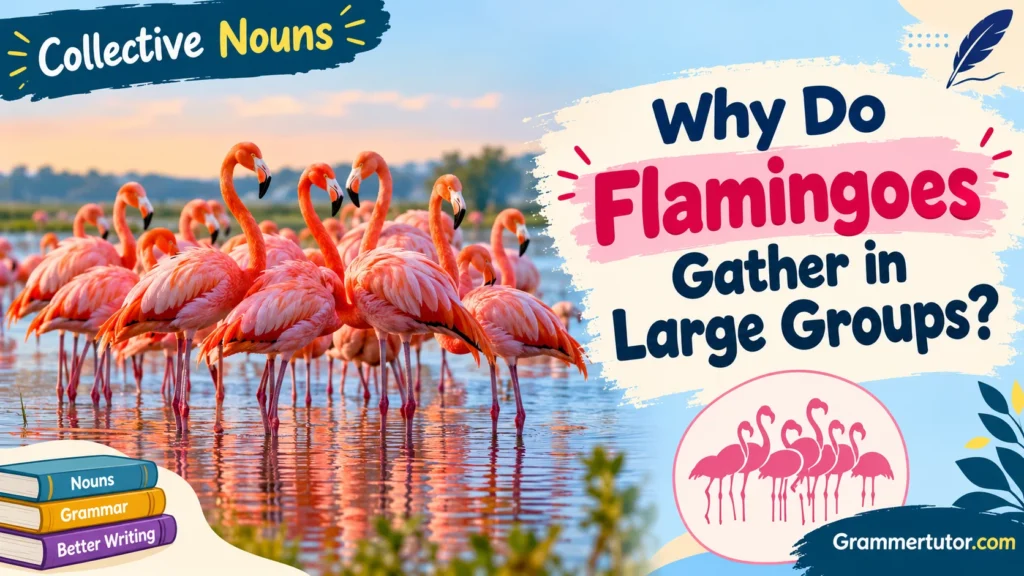
Flamingoes are highly social birds that often live in large gatherings. Their group behavior helps them find suitable feeding areas, participate in breeding activities, and respond to changing conditions in their environment.
Many flamingoes inhabit shallow lakes, salt pans, lagoons, and wetlands where food is available. When conditions are favorable, hundreds or even thousands of birds may gather in one location. Some species form enormous breeding colonies, with many nests concentrated in the same area.
Living in groups can also provide advantages when responding to predators. Numerous birds may detect disturbances more readily than an isolated individual, although the level of protection depends on the surroundings and circumstances.
Their social habits make collective nouns particularly useful. The phrase a flamboyance of flamingoes captures their striking appearance, while a colony of flamingoes emphasizes their shared breeding environment.
Collective Nouns for Flamingoes
| Collective Noun | Used For | Simple Example |
| Flamboyance | A gathering of colorful flamingoes | A flamboyance of flamingoes crossed the lagoon. |
| Flock | Flamingoes traveling or gathering together | A flock of flamingoes fed in the shallows. |
| Colony | Flamingoes nesting or breeding together | A colony of flamingoes settled on the island. |
| Group | Several flamingoes considered together | A group of flamingoes rested beside the lake. |
| Stand | Flamingoes standing together in shallow water | A stand of flamingoes occupied the marsh. |
Note: Flamboyance is the distinctive traditional collective noun most closely associated with flamingoes. Flock, colony, and group are also useful expressions. Stand is a descriptive phrase rather than a widely established flamingo-specific collective noun.
Flamboyance of Flamingoes
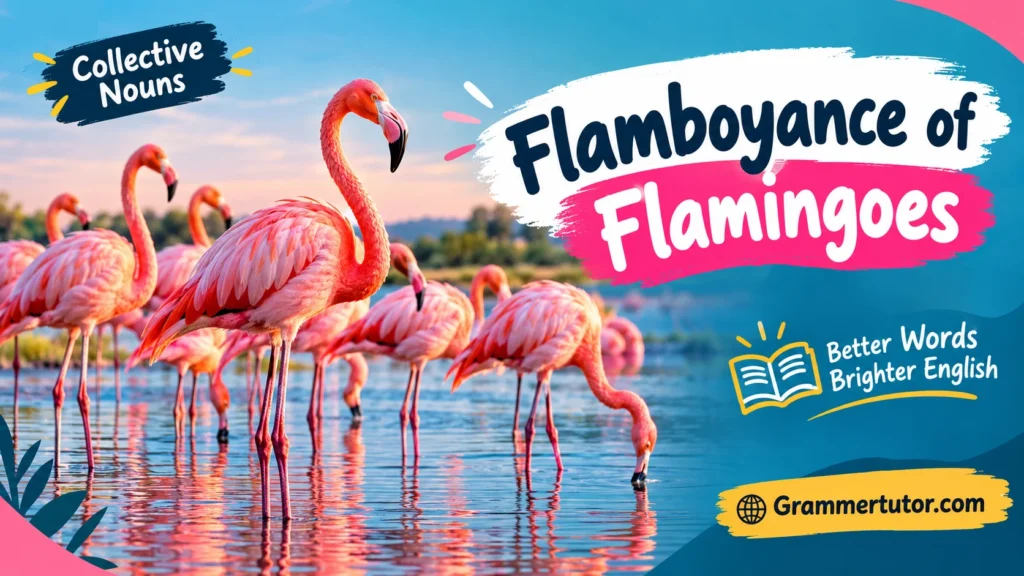
A flamboyance of flamingoes is a colorful expression used to describe a gathering of these elegant birds. The word flamboyance suggests something vivid, showy, or impressive, making it an appealing match for flamingoes with their pink and reddish plumage.
When a large gathering moves across a wetland, the birds may appear like a bright ribbon against the water. Their coordinated movements and repeated feeding motions create an unforgettable scene for wildlife photographers and visitors.
This expression is especially suitable for creative writing, nature articles, educational materials, and descriptions that emphasize the beauty of flamingoes.
Examples of “Flamboyance of Flamingoes”
- A flamboyance of flamingoes brightened the silver lake.
- We admired a flamboyance of flamingoes beneath the morning sun.
- A flamboyance of flamingoes moved through the turquoise lagoon.
- The photographer captured a flamboyance of flamingoes against the golden horizon.
- A flamboyance of flamingoes gathered beside the salt flats.
- Tourists watched a flamboyance of flamingoes wading through the marsh.
- A flamboyance of flamingoes created pink reflections across the water.
- The nature guide pointed toward a flamboyance of flamingoes near the reeds.
- A flamboyance of flamingoes rested along the peaceful shoreline.
- The sunset illuminated a flamboyance of flamingoes standing in the shallows.
Flock of Flamingoes
A flock of flamingoes is a simple and natural expression for birds gathered in one place or moving together. Unlike the more distinctive word flamboyance, the term flock is familiar across many bird species.
Flamingoes often move between feeding locations as water levels, food supplies, and weather conditions change. A flock may spread across a shallow lake while searching for small aquatic organisms, then gather more closely when disturbed or preparing to move.
The word is useful for everyday conversations because readers immediately understand that several birds are being described together. It also works well in scientific summaries and wildlife observations when no specialized collective noun is needed.
Examples of “Flock of Flamingoes”
- A flock of flamingoes glided above the coastal wetlands.
- The flock of flamingoes searched for food in the muddy shallows.
- A flock of flamingoes landed beside the freshwater pool.
- We spotted a flock of flamingoes beyond the wooden boardwalk.
- A flock of flamingoes crossed the horizon at sunrise.
- The wildlife photographer followed a flock of flamingoes along the shoreline.
- A flock of flamingoes gathered where the water was shallow.
- Several visitors watched a flock of flamingoes from the observation platform.
- A flock of flamingoes moved toward a quieter section of the lagoon.
- The flock of flamingoes disappeared behind a bank of reeds.
Colony of Flamingoes
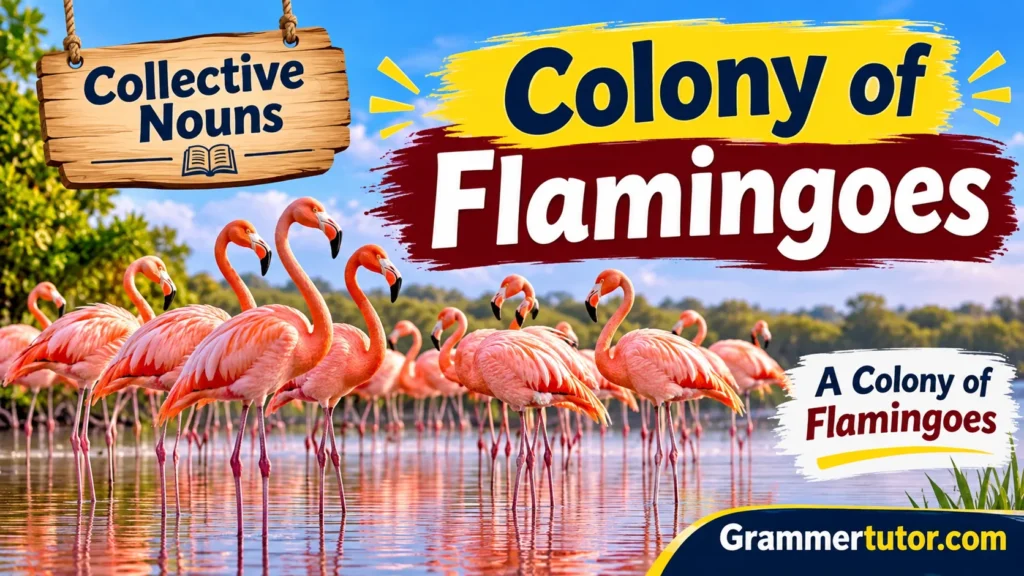
A colony of flamingoes describes birds living or breeding together in a shared location. Flamingoes are well known for establishing breeding colonies, sometimes containing thousands of pairs.
During the breeding season, many flamingoes build mud nests in suitable wetland habitats. Parents usually lay a single egg, and both adults participate in caring for their chick. Nesting close to other flamingoes allows many pairs to use the same breeding area.
A colony differs from a flock because it emphasizes a shared breeding or living environment rather than simply birds moving together. This distinction is helpful when writing about reproduction, nesting behavior, or flamingo conservation.
Examples of “Colony of Flamingoes”
- A colony of flamingoes nested on the remote salt island.
- Researchers monitored a colony of flamingoes during the breeding season.
- A colony of flamingoes raised its chicks beside the lagoon.
- The wetland supported a colony of flamingoes throughout the nesting period.
- A colony of flamingoes gathered on the exposed mudflats.
- Conservation workers protected a colony of flamingoes from disturbance.
- A colony of flamingoes occupied the shallow coastal basin.
- The documentary showed a colony of flamingoes caring for their young.
- A colony of flamingoes returned to the breeding grounds.
- The reserve provided suitable nesting conditions for a colony of flamingoes.
Group of Flamingoes
A group of flamingoes is a general expression that works whenever several birds are present together. It does not require a particular social arrangement, breeding activity, or movement pattern.
This phrase is especially helpful for beginner English learners because it is straightforward and grammatically reliable. You can use it in school assignments, wildlife reports, conversations, and descriptions of photographs.
For example, if you see several flamingoes standing beside a lake but do not know whether they belong to a breeding colony, a group of flamingoes is an appropriate choice.
Examples of “Group of Flamingoes”
- A group of flamingoes gathered beside the winding river.
- We photographed a group of flamingoes near the marsh grass.
- A group of flamingoes searched for tiny organisms in the water.
- The group of flamingoes rested on a sandy island.
- A group of flamingoes stood beneath the cloudy sky.
- The children watched a group of flamingoes through binoculars.
- A group of flamingoes walked slowly across the wetland.
- A group of flamingoes gathered near the protected shoreline.
- The guide identified a group of flamingoes from a distant viewing point.
- A group of flamingoes fed peacefully in the shallow pool.
Stand of Flamingoes
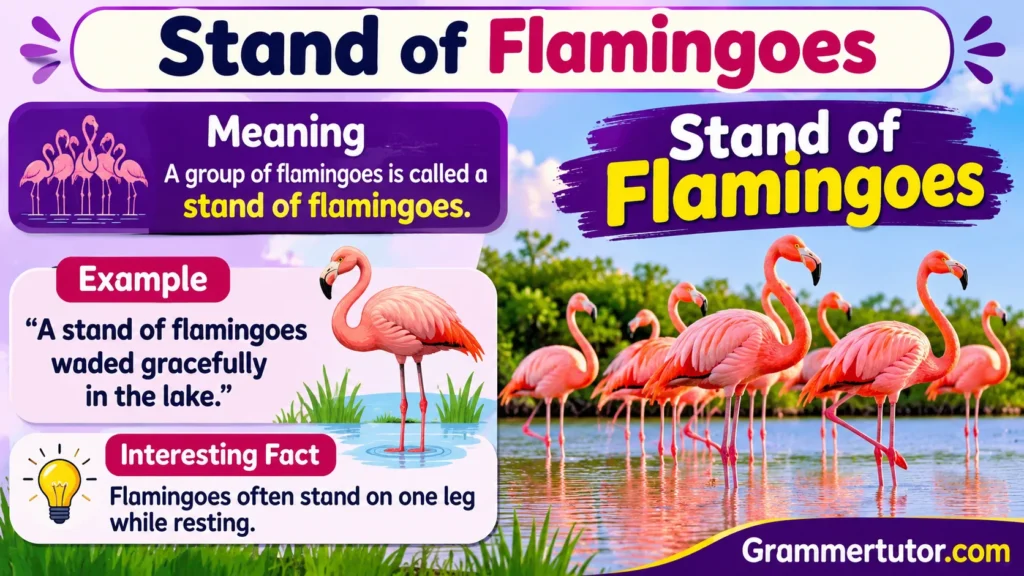
A stand of flamingoes is a descriptive expression for birds standing together, particularly in shallow water. It draws attention to their posture and the way their long legs rise above the surface.
Flamingoes often stand still while resting, feeding, or waiting for favorable conditions. Some rest on one leg, a behavior that researchers have studied in relation to heat conservation and balance. When several flamingoes stand close together, their bright bodies and long legs create a distinctive pattern across the wetland.
Although stand is not a standard flamingo-specific collective noun, it can be useful in descriptive writing when the birds’ position is the main focus.
Examples of “Stand of Flamingoes”
- A stand of flamingoes remained still in the shallow lagoon.
- We noticed a stand of flamingoes near the reed beds.
- A stand of flamingoes reflected beautifully in the calm water.
- The naturalist observed a stand of flamingoes from the riverbank.
- A stand of flamingoes rested beneath the pale morning sky.
- A stand of flamingoes occupied the edge of the salt lake.
- The artist painted a stand of flamingoes in the marsh.
- A stand of flamingoes waited beside the feeding grounds.
- A stand of flamingoes formed a pink silhouette against the sunset.
- The guide photographed a stand of flamingoes near the wetland trail.
Types of Flamingoes and Their Characteristics
Flamingoes belong to the family Phoenicopteridae, which includes six living species. These birds occur in parts of Africa, Asia, Europe, the Caribbean, and South America, depending on the species. Although they share several physical features, their sizes, habitats, and coloring vary.
The greater flamingo is the largest species and has a broad distribution across parts of Africa, southern Europe, and Asia. The lesser flamingo is smaller and is famous for gathering in enormous numbers at some African lakes. The American flamingo is known for its vivid pink coloration and occurs in the Caribbean and nearby regions. Other species include the Chilean, Andean, and James’s flamingoes, which inhabit parts of South America.
Flamingoes have long necks, elongated legs, webbed feet, and specialized bills. Their bills help them filter small food items from water and mud. Depending on the species and habitat, their diets may include algae, diatoms, tiny crustaceans, and other small aquatic organisms.
Examples of Flamingo Characteristics
- Greater flamingoes are the largest living flamingo species.
- Lesser flamingoes can gather in enormous numbers at suitable lakes.
- American flamingoes are recognized for their vivid pink plumage.
- Chilean flamingoes inhabit parts of South America.
- Andean flamingoes are associated with high-altitude Andean wetlands.
- James’s flamingoes also inhabit high-altitude areas of the Andes.
- Flamingoes have long legs adapted for wading.
- Their specialized bills help filter food from water.
- Their webbed feet help them move through soft mud.
- Flamingoes often inhabit shallow lakes, lagoons, and salt flats.
Interesting Facts About Flamingoes
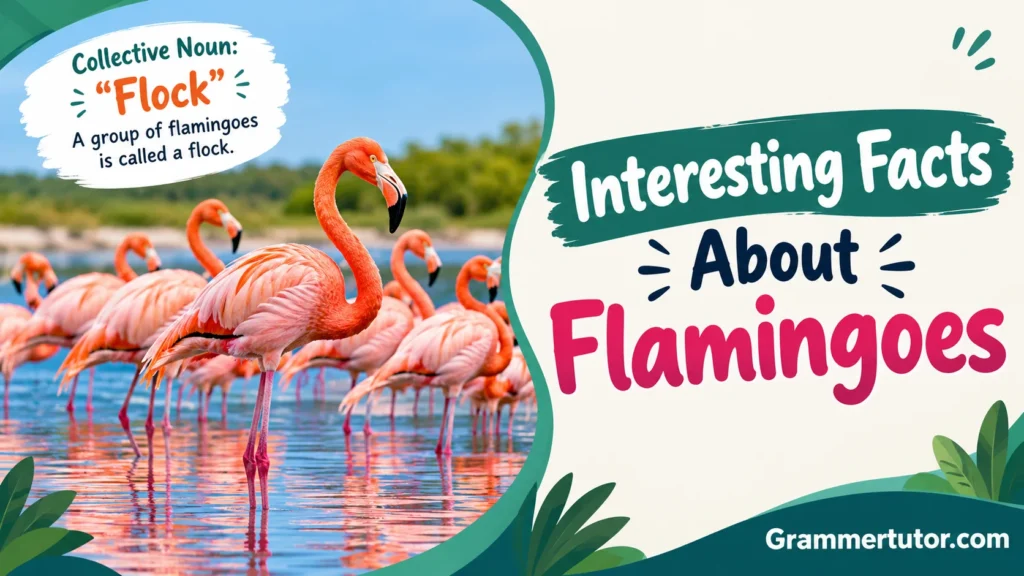
Flamingoes are fascinating birds whose physical features and feeding habits help them survive in challenging wetland environments. Their lifespan varies by species and living conditions, but flamingoes can live for several decades, particularly in protected environments. In the wild, survival depends on food availability, habitat quality, disease, predators, and environmental changes. Their long legs and necks allow them to forage in water that would be difficult for many other birds to use, while their webbed feet help them move across muddy surfaces. Flamingoes also have uniquely shaped bills equipped with specialized filtering structures that help them collect tiny organisms and other food particles from water.
Their diet may include algae, microscopic organisms, small crustaceans, and other aquatic food sources. Carotenoid pigments found in certain foods contribute to their pink and reddish coloring, although the intensity varies among species and individuals. During the breeding season, many flamingoes build mud nests and gather in large colonies, where adults share responsibility for incubating eggs and caring for chicks. Their coordinated movements, social habits, and specialized feeding adaptations make them remarkable examples of how birds can thrive in distinctive habitats.
Conclusion
In conclusion, flamboyance of flamingoes is a popular collective noun for these beautiful birds. Other terms, such as flock, colony, and group, are also useful in different contexts. Learning these expressions helps you improve your English vocabulary and describe flamingoes more clearly. Whether they are feeding in a lake, resting in a wetland, or flying together, these graceful birds make every gathering a wonderful sight.
FAQs
Q1. What is the collective noun for flamingoes?
The best-known collective noun is flamboyance of flamingoes. A flock, colony, or group of flamingoes can also be appropriate, depending on the context.
Q2. Why is a group of flamingoes called a flamboyance?
The word flamboyance suggests something colorful and striking. It is a memorable traditional expression that suits the vivid appearance of flamingoes.
Q3. Is “flock of flamingoes” correct?
Yes. Flock of flamingoes is a natural and widely understood expression for birds gathered or traveling together.
Q4. What is the difference between a flamboyance and a colony of flamingoes?
A flamboyance is a distinctive collective noun associated with flamingoes, while a colony emphasizes birds living or breeding together in a shared area.
Q5. Can I use “group of flamingoes” in a sentence?
Yes. For example: “A group of flamingoes fed beside the lagoon.” It is a simple, grammatically correct expression.