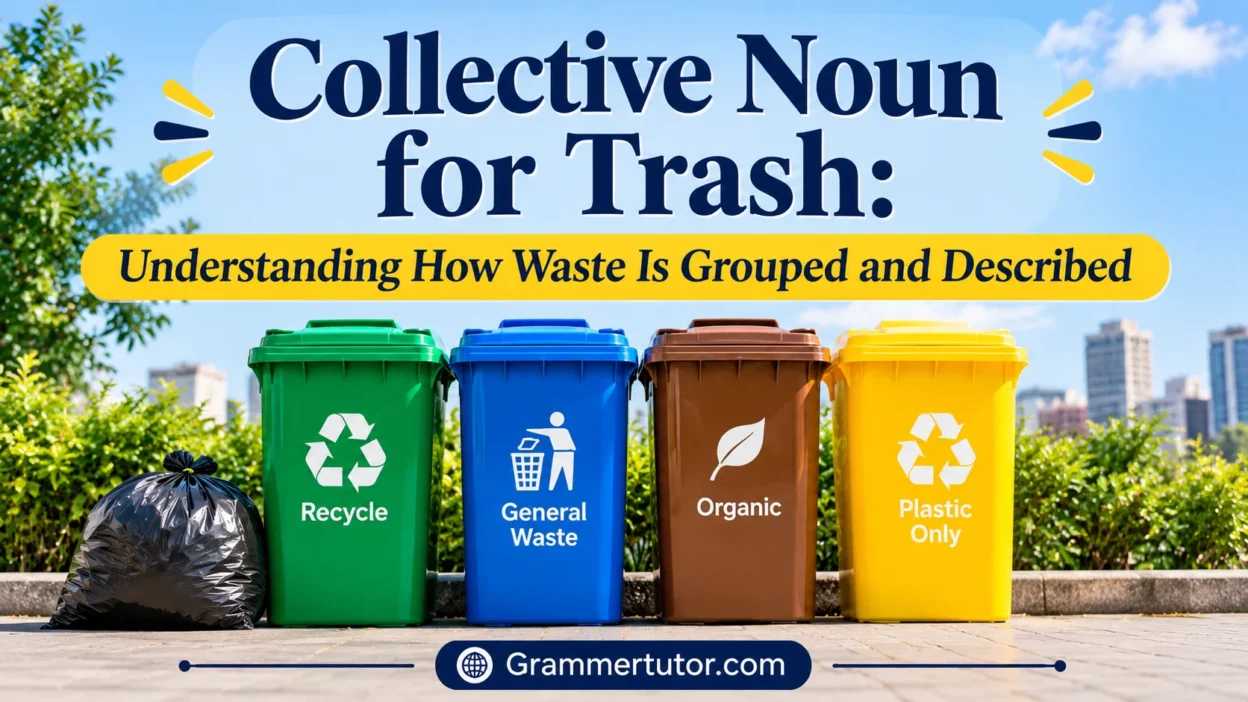
The collective noun for trash helps describe different pieces of unwanted material as one collection. In English, trash refers to materials that people throw away because they are no longer useful, no longer needed, or no longer wanted. These materials include food scraps, plastic wrappers, empty bottles, broken objects, paper, and other household waste. Unlike animals, which often have a special traditional collective noun, trash does not have one fixed expression. Instead, several useful phrases and common expressions describe how waste is gathered, stored, or arranged.
For example, a pile of trash describes unwanted materials gathered in one place, while a heap of rubbish, a load of waste, and a collection of garbage offer other ways to describe different amounts of discarded material. These expressions depend on the situation and the way materials are collected or stored. In everyday communication, I find that choosing the right phrase makes descriptions clearer. Words such as rubbish, garbage, waste, and trash can describe similar things, although their use may vary with language and context.
Understanding these expressions can improve everyday communication, especially when discussing cleanliness, recycling, waste disposal, and environmental protection. For instance, describing a gathering of discarded plastic and paper as a pile makes it easier to picture the scene. Similarly, a collection of household materials can refer to items arranged for recycling or disposal. Using the right expressions helps you describe different waste materials naturally and makes their meaning easier to understand.
How English Describes Discarded Materials
People produce different kinds of waste during their daily activities. Kitchen leftovers, packaging materials, damaged furniture, old newspapers, and empty containers may all become trash when they are no longer needed.
The expression used for these materials often depends on their condition and arrangement. For example, a pile of trash describes waste gathered together, while a bag of garbage refers to unwanted materials placed inside a rubbish bag.
These phrases are useful in conversations about cleaning homes, managing public spaces, collecting household waste, and protecting the environment. Choosing an appropriate expression makes it easier to explain the amount and condition of discarded materials.
Collective Nouns and Group Expressions for Trash
| Collective Expression | Used For | Simple Example |
| Pile | Waste gathered in one place | A pile of trash stood outside. |
| Heap | A large amount of unwanted material | A heap of rubbish covered the ground. |
| Load | Waste carried or transported together | A load of waste was taken away. |
| Collection | Different discarded objects gathered together | A collection of old materials was sorted. |
| Bag | Garbage placed inside a container | A bag of trash was left outside. |
Pile of Trash
A pile of trash describes unwanted objects gathered together in one location. It is one of the most natural expressions used in everyday English when talking about scattered or accumulated waste.
This phrase can describe household rubbish, discarded packaging, broken items, or other materials waiting to be removed. It is especially useful when describing an untidy area that needs cleaning.
Examples of “Pile of Trash”
- A pile of trash was lying behind the building.
- The workers removed a pile of trash from the street.
- We found a pile of trash near the empty house.
- A pile of trash covered part of the playground.
- The children were asked to stay away from the pile of trash.
- Someone left a pile of trash beside the entrance.
- The cleaning team collected the pile of trash.
- A pile of trash appeared near the roadside.
- The gardener cleared a pile of trash from the backyard.
- The residents complained about the pile of trash.
Heap of Rubbish
A heap of rubbish refers to a considerable quantity of unwanted materials gathered in one place. The word heap emphasizes the amount of waste and often suggests that the materials are stacked or thrown together without much organization.
This expression is commonly used in British English, where rubbish is a familiar word for unwanted objects. It can describe waste found in gardens, streets, vacant spaces, or construction areas.
Examples of “Heap of Rubbish”
- A heap of rubbish was left near the roadside.
- The workers cleared a heap of rubbish from the garden.
- We noticed a heap of rubbish behind the warehouse.
- A heap of rubbish blocked the narrow pathway.
- The old furniture formed a heap of rubbish.
- Rainwater collected around the heap of rubbish.
- The council arranged to remove the heap of rubbish.
- A heap of rubbish made the area look unpleasant.
- The volunteers cleaned the ground around the heap of rubbish.
- Nobody knew who had dumped the heap of rubbish.
Load of Waste
A load of waste describes a quantity of unwanted materials collected for transportation or disposal. The word load is particularly suitable when rubbish is placed in a truck, trailer, container, or other vehicle.
It is frequently used in discussions about garbage collection, building projects, industrial activities, and waste management services.
Examples of “Load of Waste”
- The truck carried a load of waste to the disposal site.
- Workers removed a load of waste from the construction area.
- A load of waste arrived at the recycling facility.
- The company transported a load of waste after the renovation.
- The driver delivered a load of waste to the treatment center.
- A load of waste was collected from the factory.
- The workers separated recyclable materials from the load of waste.
- The municipality arranged to remove the load of waste.
- A heavy load of waste was waiting for transportation.
- The recycling team inspected the load of waste before sorting it.
Collection of Garbage
A collection of garbage refers to different unwanted objects gathered together. This expression can describe various types of discarded materials collected during household cleaning, public sanitation activities, or environmental projects.
The word collection focuses on the materials being brought together rather than their physical arrangement. It is particularly useful when several different kinds of rubbish are being examined or separated.
Examples of “Collection of Garbage”
- A collection of garbage was found near the riverbank.
- The volunteers gathered a collection of garbage from the beach.
- The workers sorted the collection of garbage into different categories.
- A collection of garbage was removed from the public garden.
- The students examined a collection of garbage during their project.
- The cleanup team photographed the collection of garbage.
- A collection of garbage contained plastic bottles and paper.
- The organization arranged the proper disposal of the collection of garbage.
- The collection of garbage was separated for recycling.
- Local residents helped reduce the collection of garbage in the neighborhood.
Bag of Trash
A bag of trash describes unwanted materials placed inside a bag for storage or disposal. This expression is commonly used in homes, offices, restaurants, schools, and public places.
People often use garbage bags to keep discarded materials together and make their removal easier. The phrase is especially suitable when waste has already been collected rather than scattered across an area.
Examples of “Bag of Trash”
- She placed a bag of trash outside the kitchen.
- The cleaner carried a bag of trash to the bin.
- A bag of trash was waiting beside the back door.
- He tied the bag of trash before leaving.
- The children helped take a bag of trash outside.
- A bag of trash was left near the entrance.
- The worker replaced the full bag of trash.
- We found a bag of trash beside the garage.
- The restaurant staff removed a bag of trash after closing.
- Please put the bag of trash in the outdoor container.
Different Materials Commonly Found in Trash
Trash contains many types of discarded materials produced by households, businesses, industries, and public activities. Some waste comes from preparing meals, while other materials are created through shopping, manufacturing, gardening, and construction work.
Food leftovers, cardboard, plastic packaging, glass containers, metal cans, and damaged household products are common examples. These materials do not all require the same disposal method. Some can be recycled, some can be composted, and others need special treatment.
Separating different materials helps reduce unnecessary landfill waste and makes recycling programs more effective.
Examples of Common Waste Materials
- Plastic bottles can be collected for recycling.
- Vegetable peels can be added to suitable compost systems.
- Old newspapers can be processed into recycled paper.
- Empty glass jars can be reused or recycled.
- Metal cans can be sorted for metal recovery.
- Cardboard boxes can be flattened before collection.
- Broken furniture may require special disposal arrangements.
- Used batteries should be taken to suitable collection points.
- Food packaging can be separated according to local recycling rules.
- Garden leaves can be used to produce natural compost.
Interesting Facts About Trash
Trash has become an important subject because the amount and type of waste produced by people affect the natural environment. Different materials remain in the environment for different lengths of time. Food scraps and other organic materials can decompose relatively quickly under suitable conditions, while plastics may persist for many years. The exact decomposition period depends on the material and environmental conditions, such as sunlight, moisture, temperature, and oxygen.
One interesting feature of waste is that not everything thrown away is completely useless. Paper, cardboard, glass, and many metals can be processed and turned into new products. Some organic materials, including fruit peels, vegetable leftovers, and garden clippings, can also become compost. This process transforms suitable biodegradable waste into material that improves soil quality.
The way trash is handled also influences environmental cleanliness. When rubbish is dumped into rivers, open spaces, or drainage systems, it can damage natural habitats and create problems for wildlife. Animals may accidentally swallow plastic pieces or become trapped in discarded packaging. Proper collection and responsible disposal help reduce these dangers.
Another important fact is that reducing waste often begins before an item becomes rubbish. Reusing shopping bags, repairing damaged belongings, choosing products with less packaging, and separating recyclable materials can all help decrease the amount of garbage sent to disposal facilities. These simple habits demonstrate how everyday decisions can contribute to a cleaner environment.
Examples of Waste Management Facts
- Paper can be recycled into new paper products.
- Glass can be recycled repeatedly without losing its basic material quality.
- Food scraps can be composted under suitable conditions.
- Plastic waste can harm animals and natural habitats.
- Metal cans can be processed for reuse.
- Batteries require special disposal methods.
- Recycling helps conserve certain natural resources.
- Reusable containers can reduce packaging waste.
- Poor rubbish disposal can block drainage systems.
- Separating waste makes recycling easier.
Conclusion
The collective noun for trash can vary depending on how unwanted materials are gathered or stored. Expressions such as a pile of trash, a heap of rubbish, a load of waste, and a collection of garbage help describe different amounts of discarded material. Although trash does not have one fixed traditional collective noun, these common phrases make everyday English clearer and help you communicate more effectively about waste management, recycling, and environmental cleanliness.
FAQs
Q1. What is the collective noun for trash?
There is no single special collective noun for trash. A pile of trash is one of the most common expressions used to describe unwanted materials gathered together.
Q2. Can I use “heap of trash” in a sentence?
Yes. A heap of trash is a grammatically correct expression that describes a large amount of rubbish gathered in one place.
Q3. What is the difference between a pile of trash and a load of waste?
A pile of trash describes discarded materials gathered in one location, while a load of waste usually refers to materials collected for carrying or transportation.
Q4. Is garbage the same as trash?
Yes. Both words describe unwanted materials that people throw away. Trash is especially common in American English, while rubbish is widely used in British English.
Q5. Can trash be recycled?
Yes. Many discarded materials, including paper, cardboard, glass, and certain plastics and metals, can be recycled when they are properly sorted and accepted by local recycling programs.